AI Chatbots and Assistants

Explore the best AI Chatbots and Assistants — independent reviews, comparisons, pricing and step-by-step how-to guides, curated by Aizhi.

  • Latent semantic mapping

    Latent semantic mapping

    Latent semantic mapping (LSM) is a data-driven framework to model globally meaningful relationships implicit in large volumes of (often textual) data. It is a generalization of latent semantic analysis. In information retrieval, LSA enables retrieval on the basis of conceptual content, instead of merely matching words between queries and documents. LSM was derived from earlier work on latent semantic analysis. There are 3 main characteristics of latent semantic analysis: Discrete entities, usually in the form of words and documents, are mapped onto continuous vectors, the mapping involves a form of global correlation pattern, and dimensionality reduction is an important aspect of the analysis process. These constitute generic properties, and have been identified as potentially useful in a variety of different contexts. This usefulness has encouraged great interest in LSM. The intended product of latent semantic mapping, is a data-driven framework for modeling relationships in large volumes of data. Mac OS X v10.5 and later includes a framework implementing latent semantic mapping.

    Read more →
  • Source criticism

    Source criticism

    Source criticism (or information evaluation) is the process of evaluating an information source, i.e.: a document, a person, a speech, a fingerprint, a photo, an observation, or anything used in order to obtain knowledge. In relation to a given purpose, a given information source may be more or less valid, reliable or relevant. Broadly, "source criticism" is the interdisciplinary study of how information sources are evaluated for given tasks. == Meaning == Problems in translation: The Danish word kildekritik, like the Norwegian word kildekritikk and the Swedish word källkritik, derived from the German Quellenkritik and is closely associated with the German historian Leopold von Ranke (1795–1886). Historian Wolfgang Hardtwig wrote: His [Ranke's] first work Geschichte der romanischen und germanischen Völker von 1494–1514 (History of the Latin and Teutonic Nations from 1494 to 1514) (1824) was a great success. It already showed some of the basic characteristics of his conception of Europe, and was of historiographical importance particularly because Ranke made an exemplary critical analysis of his sources in a separate volume, Zur Kritik neuerer Geschichtsschreiber (On the Critical Methods of Recent Historians). In this work he raised the method of textual criticism used in the late eighteenth century, particularly in classical philology to the standard method of scientific historical writing. (Hardtwig, 2001, p. 12739) Historical theorist Chris Lorenz wrote: The larger part of the nineteenth and twentieth centuries would be dominated by the research-oriented conception of historical method of the so-called Historical School in Germany, led by historians as Leopold Ranke and Berthold Niebuhr. Their conception of history, long been regarded as the beginning of modern, 'scientific' history, harked back to the 'narrow' conception of historical method, limiting the methodical character of history to source criticism. (Lorenz, 2001) In the early 21st century, source criticism is a growing field in, among other fields, library and information science. In this context source criticism is studied from a broader perspective than just, for example, history, classical philology, or biblical studies (but there, too, it has more recently received new attention). == Principles == The following principles are from two Scandinavian textbooks on source criticism, written by the historians Olden-Jørgensen (1998) and Thurén (1997): Human sources may be relics (e.g. a fingerprint) or narratives (e.g. a statement or a letter). Relics are more credible sources than narratives. A given source may be forged or corrupted; strong indications of the originality of the source increases its reliability. The closer a source is to the event which it purports to describe, the more one can trust it to give an accurate description of what really happened A primary source is more reliable than a secondary source, which in turn is more reliable than a tertiary source and so on. If a number of independent sources contain the same message, the credibility of the message is strongly increased. The tendency of a source is its motivation for providing some kind of bias. Tendencies should be minimized or supplemented with opposite motivations. If it can be demonstrated that the witness (or source) has no direct interest in creating bias, the credibility of the message is increased. Two other principles are: Knowledge of source criticism cannot substitute for subject knowledge: "Because each source teaches you more and more about your subject, you will be able to judge with ever-increasing precision the usefulness and value of any prospective source. In other words, the more you know about the subject, the more precisely you can identify what you must still find out". (Bazerman, 1995, p. 304). The reliability of a given source is relative to the questions put to it. "The empirical case study showed that most people find it difficult to assess questions of cognitive authority and media credibility in a general sense, for example, by comparing the overall credibility of newspapers and the Internet. Thus these assessments tend to be situationally sensitive. Newspapers, television and the Internet were frequently used as sources of orienting information, but their credibility varied depending on the actual topic at hand" (Savolainen, 2007). The following questions are often good ones to ask about any source according to the American Library Association (1994) and Engeldinger (1988): How was the source located? What type of source is it? Who is the author and what are the qualifications of the author in regard to the topic that is discussed? When was the information published? In which country was it published? What is the reputation of the publisher? Does the source show a particular cultural or political bias? For literary sources complementing criteria are: Does the source contain a bibliography? Has the material been reviewed by a group of peers, or has it been edited? How does the article/book compare with similar articles/books? == Levels of generality == Some principles of source criticism are universal, other principles are specific for certain kinds of information sources. There is today no consensus about the similarities and differences between source criticism in the natural science and humanities. Logical positivism claimed that all fields of knowledge were based on the same principles. Much of the criticism of logical positivism claimed that positivism is the basis of the sciences, whereas hermeneutics is the basis of the humanities. This was, for example, the position of Jürgen Habermas. A newer position, in accordance with, among others, Hans-Georg Gadamer and Thomas Kuhn, understands both science and humanities as determined by researchers' preunderstanding and paradigms. Hermeneutics is thus a universal theory. The difference is, however, that the sources of the humanities are themselves products of human interests and preunderstanding, whereas the sources of the natural sciences are not. Humanities are thus "doubly hermeneutic". Natural scientists, however, are also using human products (such as scientific papers) which are products of preunderstanding (and can lead to, for example, academic fraud). == Contributing fields == === Epistemology === Epistemological theories are the basic theories about how knowledge is obtained and are thus the most general theories about how to evaluate information sources. Empiricism evaluates sources by considering the observations (or sensations) on which they are based. Sources without basis in experience are not seen as valid. Rationalism provides low priority to sources based on observations. In order to be meaningful, observations must be explained by clear ideas or concepts. It is the logical structure and the well definedness that is in focus in evaluating information sources from the rationalist point of view. Historicism evaluates information sources on the basis of their reflection of their sociocultural context and their theoretical development. Pragmatism evaluate sources on the basis of how their values and usefulness to accomplish certain outcomes. Pragmatism is skeptical about claimed neutral information sources. The evaluation of knowledge or information sources cannot be more certain than is the construction of knowledge. If one accepts the principle of fallibilism then one also has to accept that source criticism can never 100% verify knowledge claims. As discussed in the next section, source criticism is intimately linked to scientific methods. The presence of fallacies of argument in sources is another kind of philosophical criterion for evaluating sources. Fallacies are presented by Walton (1998). Among the fallacies are the ad hominem fallacy (the use of personal attack to try to undermine or refute a person's argument) and the straw man fallacy (when one arguer misrepresents another's position to make it appear less plausible than it really is, in order more easily to criticize or refute it.) === Research methodology === Research methods are methods used to produce scholarly knowledge. The methods that are relevant for producing knowledge are also relevant for evaluating knowledge. An example of a book that turns methodology upside-down and uses it to evaluate produced knowledge is Katzer; Cook & Crouch (1998). === Science studies === Studies of quality evaluation processes such as peer review, book reviews and of the normative criteria used in evaluation of scientific and scholarly research. Another field is the study of scientific misconduct. Harris (1979) provides a case study of how a famous experiment in psychology, Little Albert, has been distorted throughout the history of psychology, starting with the author (Watson) himself, general textbook authors, behavior therapists, and a prominent learning theorist. Harris proposes possible causes for these distortions and analyzes the Albert study as an ex

    Read more →
  • Paper data storage

    Paper data storage

    Paper data storage refers to the use of paper as a data storage device. This includes writing, illustrating, and the use of data that can be interpreted by a machine or is the result of the functioning of a machine. A defining feature of paper data storage is the ability of humans to produce it with only simple tools and interpret it visually. Though now mostly obsolete, paper was once an important form of computer data storage as both paper tape and punch cards were a common staple of working with computers before the 1980s. == History == Before paper was used for storing data, it had been used in several applications for storing instructions to specify a machine's operation. The earliest use of paper to store instructions for a machine was the work of Basile Bouchon who, in 1725, used punched paper rolls to control textile looms. This technology was later developed into the wildly successful Jacquard loom. The 19th century saw several other uses of paper for controlling machines. In 1846, telegrams could be prerecorded on punched tape and rapidly transmitted using Alexander Bain's automatic telegraph. Several inventors took the concept of a mechanical organ and used paper to represent the music. In the late 1880s Herman Hollerith invented the recording of data on a medium that could then be read by a machine. Prior uses of machine readable media, above, had been for control (automatons, piano rolls, looms, ...), not data. "After some initial trials with paper tape, he settled on punched cards..." Hollerith's method was used in the 1890 census. Hollerith's company eventually became the core of IBM. Other technologies were also developed that allowed machines to work with marks on paper instead of punched holes. This technology was widely used for tabulating votes and grading standardized tests. Banks used magnetic ink on checks, supporting MICR scanning. In an early electronic computing device, the Atanasoff–Berry Computer, electric sparks were used to singe small holes in paper cards to represent binary data. The altered dielectric constant of the paper at the location of the holes could then be used to read the binary data back into the machine by means of electric sparks of lower voltage than the sparks used to create the holes. This form of paper data storage was never made reliable and was not used in any subsequent machine. == Modern techniques == === 1D barcodes === Barcodes make it possible for any object that was to be sold or transported to have some computer readable information securely attached to it. Universal Product Code barcodes, first used in 1974, are ubiquitous today. Some people recommend a width of at least 3 pixels for each minimum-width gap and each minimum-width bar for 1D barcodes. The density is about 50 bits per linear inch (about 2 bit/mm). === 2D barcodes === 2D barcodes allow to store much more data on paper, up to 2.9 kbyte per barcode. It is recommended to have a width of at least 4 pixels—e.g., a 4 × 4 pixel = 16 pixel module. == Limits == The limits of data storage depend on the technology to write and read such data. The theoretical limits assume a scanner that can perfectly reproduce the printed image at its printing resolution, and a program which can accurately interpret such an image. For example, an 8 in × 10 in (200 mm × 250 mm) 600 dpi black-and-white image contains 3.43 MiB of data, as does a 300 dpi CMYK printed image. A 2,400 ppi True color (24-bit) image contains about 1.29 GiB of information; printing an image maintaining this data would require a printing resolution of about 120,000 dpi in black and white, or 60,000 dpi with CMYK dots.

    Read more →
  • Metadata management

    Metadata management

    Metadata management involves managing metadata about other data, whereby this "other data" is generally referred to as content data. The term is used most often in relation to digital media, but older forms of metadata are catalogs, dictionaries, and taxonomies. For example, the Dewey Decimal Classification is a metadata management system developed in 1876 for libraries. == Metadata schema == Metadata management goes by the end-to-end process and governance framework for creating, controlling, enhancing, attributing, defining and managing a metadata schema, model or other structured aggregation system, either independently or within a repository and the associated supporting processes (often to enable the management of content). For web-based systems, URLs, images, video etc. may be referenced from a triples table of object, attribute and value. == Scope == With specific knowledge domains, the boundaries of the metadata for each must be managed, since a general ontology is not useful to experts in one field whose language is knowledge-domain specific. == Metadata Manager == In the process of developing a knowledge management solution, creating a metadata schema, and a system in which metadata is managed, a dedicated resource may be appointed to maintain adherence to metadata standards as defined by data owners as well as general best practice. This person is responsible for curation of the business and technical layers of the metadata schema, and commonly involved with strategy and implementation. A metadata manager is not required to master all aspects, or be involved with everything concerning the solution, but an understanding of as much of the process as possible to ensure a relevant schema is developed. == Metadata management over time == Managing the metadata in a knowledge management solution is an important step in a metadata strategy. It is part of the strategy to make sure that the metadata are complete, current and correct at any given time. Managing a metadata project is also about making sure that users of the system are aware of the possibilities allowed by a well-designed metadata system and how to maximize the benefits of metadata. Regularly monitoring the metadata to ensure that the schema remains relevant is advised. === Wikipedia metadata === Wikipedia is a project that actively manages metadata for its articles and files. For example, volunteer editors carefully curate new biographical articles based on the notability (claim to fame), name, birth, and/or death dates. Similarly, volunteer editors carefully curate new architectural articles based on name, municipality, or geo coordinates. When new articles with a valid alternate spelling are added to Wikipedia that match up to existing articles based on metadata, these are then manually checked and if needed, tagged for merging. When new articles are added that are considered out of scope or otherwise unfit for Wikipedia, these are nominated for deletion. To help keep track of metadata on Wikipedia, the new Wikimedia project Wikidata was established in 2012. Click on the pictures to view more metadata about these images:

    Read more →
  • Simple interactive object extraction

    Simple interactive object extraction

    Simple interactive object extraction (SIOX) is an algorithm for extracting foreground objects from color images and videos with very little user interaction. It has been implemented as "foreground selection" tool in the GIMP (since version 2.3.3), as part of the tracer tool in Inkscape (since 0.44pre3), and as function in ImageJ and Fiji (plug-in). Experimental implementations were also reported for Blender and Krita. Although the algorithm was originally designed for videos, virtually all implementations use SIOX primarily for still image segmentation. In fact, it is often said to be the current de facto standard for this task in the open-source world. Initially, a free hand selection tool is used to specify the region of interest. It must contain all foreground objects to extract and as few background as possible. The pixels outside the region of interest form the sure background while the inner region define a superset of the foreground, i.e. the unknown region. A so-called foreground brush is then used to mark representative foreground regions. The algorithm outputs a selection mask. The selection can be refined by either adding further foreground markings or by adding background markings using the background brush. Technically, the algorithm performs the following steps: Create a set of representative colors for sure foreground and sure background, the so-called color signatures. Assign all image points to foreground or background by a weighted nearest neighbor search in the color signatures. Apply some standard image processing operations like erode, dilate, and blur to remove artifacts. Find the connected foreground components that are either large enough or marked by the user. For video segmentation the sure background and sure foreground regions are learned from motion statistics. SIOX also features tools that allow sub-pixel accurate refinement of edges and high texture areas, the so-called "detail refinement brushes". As with all segmentation algorithms, there are always pictures where the algorithm does not yield perfect results. The most critical drawback of SIOX is the color dependence. Although many photos are well-separable by color, the algorithm cannot deal with camouflage. If the foreground and background share many identical shades of similar colors, the algorithm might give a result with parts missing or incorrectly classified foreground. SIOX performs about equally well on different benchmarks compared to graph-based segmentation methods, such as Grabcut. SIOX is, however, more noise robust and can therefore also be used for the segmentation of videos. Graph-based segmentation methods search for a minimum cut and therefore tend to not perform optimally with complex structures. The algorithm has initially been developed at the department of computer science at Freie Universitaet Berlin. The main developer, Gerald Friedland, is now faculty at the EECS department of the University of California at Berkeley and also a Principal Data Scientist at Lawrence Livermore National Lab. He continues to support the development through mentoring, e.g. in the Google Summer of Code.

    Read more →
  • Enterprise bus matrix

    Enterprise bus matrix

    The enterprise bus matrix is a data warehouse planning tool and model created by Ralph Kimball, and is part of the data warehouse bus architecture. The matrix is the logical definition of one of the core concepts of Kimball's approach to dimensional modeling conformed dimension. The bus matrix defines part of the data warehouse bus architecture and is an output of the business requirements phase in the Kimball lifecycle. It is applied in the following phases of dimensional modeling and development of the data warehouse. The matrix can be categorized as a hybrid model, being part technical design tool, part project management tool and part communication tool == Background == The need for an enterprise bus matrix stems from the way one goes about creating the overall data warehouse environment. Historically there have been two approaches: a structured, centralized and planned approach and a more loosely defined, department specific approach, in which solutions are developed in a more independent matter. Autonomous projects can result in a range of isolated stove pipe data marts. Naturally each approach has its issues; the visionary approach often struggles with long delivery cycles and lack of reaction time as needs emerge and scope issues arise. On the other hand, the development of isolated data marts leads to stovepipe systems that lack synergy in development. Over time this approach will lead to a so-called data-mart-in-a-box architecture where interoperability and lack of cohesion is apparent, and can hinder the realization of an overall enterprise data warehouse. As an attempt to handle this issue, Ralph Kimball introduced the enterprise bus. == Description == The bus matrix purpose is one of high abstraction and visionary planning on the data warehouse architectural level. By dictating coherency in the development and implementation of an overall data warehouse the bus architecture approach enables an overall vision of the broader enterprise integration and consistency while at the same time dividing the problem into more manageable parts – all in a technology and software independent manner. The bus matrix and architecture builds upon the concept of conformed dimensions, creating a structure of common dimensions that ideally can be used across the enterprise by all business processes related to the data warehouse and the corresponding fact tables from which they derive their context. According to Kimball and Margy Ross's article “Differences of Opinion” "The Enterprise Data warehouse built on the bus architecture ”identifies and enforces the relationship between business process metrics (facts) and descriptive attributes (dimensions)”. The concept of a bus is well known in the language of information technology, and is what reflects the conformed dimension concept in the data warehouse, creating the skeletal structure where all parts of a system connect, ensuring interoperability and consistency of data, and at the same time considers future expansion. This makes the conformed dimensions act as the integration ‘glue’, creating a robust backbone of the enterprise Data Warehouse.

    Read more →
  • Sequential algorithm

    Sequential algorithm

    In computer science, a sequential algorithm or serial algorithm is an algorithm that is executed sequentially – once through, from start to finish, without other processing executing – as opposed to concurrently or in parallel. The term is primarily used to contrast with concurrent algorithm or parallel algorithm; most standard computer algorithms are sequential algorithms, and not specifically identified as such, as sequentialness is a background assumption. Concurrency and parallelism are in general distinct concepts, but they often overlap – many distributed algorithms are both concurrent and parallel – and thus "sequential" is used to contrast with both, without distinguishing which one. If these need to be distinguished, the opposing pairs sequential/concurrent and serial/parallel may be used. "Sequential algorithm" may also refer specifically to an algorithm for decoding a convolutional code.

    Read more →
  • Gutmann method

    Gutmann method

    The Gutmann method is an algorithm for securely erasing the contents of computer hard disk drives, such as files. Devised by Peter Gutmann and Colin Plumb and presented in the paper Secure Deletion of Data from Magnetic and Solid-State Memory in July 1996, it involved writing a series of 35 patterns over the region to be erased. The selection of patterns assumes that the user does not know the encoding mechanism used by the drive, so it includes patterns designed specifically for three types of drives. A user who knows which type of encoding the drive uses can choose only those patterns intended for their drive. A drive with a different encoding mechanism would need different patterns. Most of the patterns in the Gutmann method were designed for older MFM/RLL-encoded disks. Gutmann himself has noted that more modern drives no longer use these older encoding techniques, making parts of the method irrelevant. He said "In the time since this paper was published, some people have treated the 35-pass overwrite technique described in it more as a kind of voodoo incantation to banish evil spirits than the result of a technical analysis of drive encoding techniques". Since about 2001, some ATA IDE and SATA hard drive manufacturer designs include support for the ATA Secure Erase standard, obviating the need to apply the Gutmann method when erasing an entire drive. The Gutmann method does not apply to USB sticks: a 2011 study reports that 71.7% of data remained available. On solid state drives it resulted in 0.8–4.3% recovery. == Background == The delete function in most operating systems simply marks the space occupied by the file as reusable (removes the pointer to the file) without immediately removing any of its contents. At this point the file can be fairly easily recovered by numerous recovery applications. However, once the space is overwritten with other data, there is no known way to use software to recover it. It cannot be done with software alone since the storage device only returns its current contents via its normal interface. Gutmann claims that intelligence agencies have sophisticated tools, including magnetic force microscopes, which together with image analysis, can detect the previous values of bits on the affected area of the media (for example hard disk). This claim however seems to be invalid based on the thesis "Data Reconstruction from a Hard Disk Drive using Magnetic Force Microscopy". == Method == An overwrite session consists of a lead-in of four random write patterns, followed by patterns 5 to 31 (see rows of table below), executed in a random order, and a lead-out of four more random patterns. Each of patterns 5 to 31 was designed with a specific magnetic media encoding scheme in mind, which each pattern targets. The drive is written to for all the passes even though the table below only shows the bit patterns for the passes that are specifically targeted at each encoding scheme. The result should obscure any data on the drive so that only the most advanced physical scanning (e.g., using a magnetic force microscope) of the drive is likely to be able to recover any data. The series of patterns is as follows: Encoded bits shown in bold are what should be present in the ideal pattern, although due to the encoding the complementary bit is actually present at the start of the track. == Criticism == Daniel Feenberg of the National Bureau of Economic Research, an American private nonprofit research organization, criticized Gutmann's claim that intelligence agencies are likely to be able to read overwritten data, citing a lack of evidence for such claims. He finds that Gutmann cites one non-existent source and sources that do not actually demonstrate recovery, only partially-successful observations. The definition of "random" is also quite different from the usual one used: Gutmann expects the use of pseudorandom data with sequences known to the recovering side, not an unpredictable one such as a cryptographically secure pseudorandom number generator. Nevertheless, some published government security procedures consider an overwritten disk to still be sensitive. Human factors and potential limitations in the overwriting software create a residual risk that is not considered acceptable at the highest security levels. Gutmann himself has responded to some of these criticisms and also criticized how his algorithm has been abused in an epilogue to his original paper, in which he states: In the time since this paper was published, some people have treated the 35-pass overwrite technique described in it more as a kind of voodoo incantation to banish evil spirits than the result of a technical analysis of drive encoding techniques. As a result, they advocate applying the voodoo to PRML and EPRML drives even though it will have no more effect than a simple scrubbing with random data. In fact performing the full 35-pass overwrite is pointless for any drive since it targets a blend of scenarios involving all types of (normally-used) encoding technology, which covers everything back to 30+-year-old MFM methods (if you don't understand that statement, re-read the paper). If you're using a drive which uses encoding technology X, you only need to perform the passes specific to X, and you never need to perform all 35 passes. For any modern PRML/EPRML drive, a few passes of random scrubbing is the best you can do. As the paper says, "A good scrubbing with random data will do about as well as can be expected". This was true in 1996, and is still true now. Gutmann's statement has been criticized for not recognizing that PRML/EPRML does not replace RLL, with critics claiming PRML/EPRML to be a signal detection method rather than a data encoding method. Polish data recovery service Kaleron has also claimed that Gutmann's publication contains further factual errors and assumptions that do not apply to actual disks.

    Read more →
  • Seccomp

    Seccomp

    seccomp (short for secure computing) is a computer security facility in the Linux kernel. seccomp allows a process to make a one-way transition into a "secure" state where it cannot make any system calls except exit(), sigreturn(), read() and write() to already-open file descriptors. Should it attempt any other system calls, the kernel will either just log the event or terminate the process with SIGKILL or SIGSYS. In this sense, it does not virtualize the system's resources but isolates the process from them entirely. seccomp mode is enabled via the prctl(2) system call using the PR_SET_SECCOMP argument, or (since Linux kernel 3.17) via the seccomp(2) system call. seccomp mode used to be enabled by writing to a file, /proc/self/seccomp, but this method was removed in favor of prctl(). In some kernel versions, seccomp disables the RDTSC x86 instruction, which returns the number of elapsed processor cycles since power-on, used for high-precision timing. seccomp-bpf is an extension to seccomp that allows filtering of system calls using a configurable policy implemented using Berkeley Packet Filter rules. It is used by OpenSSH and vsftpd as well as the Google Chrome/Chromium web browsers on ChromeOS and Linux. (In this regard seccomp-bpf achieves similar functionality, but with more flexibility and higher performance, to the older systrace—which seems to be no longer supported for Linux.) Some consider seccomp comparable to OpenBSD pledge(2) and FreeBSD capsicum(4). == History == seccomp was first devised by Andrea Arcangeli in January 2005 for use in public grid computing and was originally intended as a means of safely running untrusted compute-bound programs. It was merged into the Linux kernel mainline in kernel version 2.6.12, which was released on March 8, 2005. == Software using seccomp or seccomp-bpf == Android uses a seccomp-bpf filter in the zygote since Android 8.0 Oreo. systemd's sandboxing options are based on seccomp. QEMU, the Quick Emulator, the core component to the modern virtualization together with KVM uses seccomp on the parameter --sandbox Docker – software that allows applications to run inside of isolated containers. Docker can associate a seccomp profile with the container using the --security-opt parameter. Arcangeli's CPUShare was the only known user of seccomp for a while. Writing in February 2009, Linus Torvalds expresses doubt whether seccomp is actually used by anyone. However, a Google engineer replied that Google is exploring using seccomp for sandboxing its Chrome web browser. Firejail is an open source Linux sandbox program that utilizes Linux namespaces, Seccomp, and other kernel-level security features to sandbox Linux and Wine applications. As of Chrome version 20, seccomp-bpf is used to sandbox Adobe Flash Player. As of Chrome version 23, seccomp-bpf is used to sandbox the renderers. Snap specify the shape of their application sandbox using "interfaces" which snapd translates to seccomp, AppArmor and other security constructs vsftpd uses seccomp-bpf sandboxing as of version 3.0.0. OpenSSH has supported seccomp-bpf since version 6.0. Mbox uses ptrace along with seccomp-bpf to create a secure sandbox with less overhead than ptrace alone. LXD, a Ubuntu "hypervisor" for containers Firefox and Firefox OS, which use seccomp-bpf Tor supports seccomp since 0.2.5.1-alpha Lepton, a JPEG compression tool developed by Dropbox uses seccomp Kafel is a configuration language, which converts readable policies into seccompb-bpf bytecode Subgraph OS uses seccomp-bpf Flatpak uses seccomp for process isolation Bubblewrap is a lightweight sandbox application developed from Flatpak minijail uses seccomp for process isolation SydBox uses seccomp-bpf to improve the runtime and security of the ptrace sandboxing used to sandbox package builds on Exherbo Linux distribution. File, a Unix program to determine filetypes, uses seccomp to restrict its runtime environment Zathura, a minimalistic document viewer, uses seccomp filter to implement different sandbox modes Tracker, a indexing and preview application for the GNOME desktop environment, uses seccomp to prevent automatic exploitation of parsing vulnerabilities in media files

    Read more →
  • Data drilling

    Data drilling

    Data drilling (also drilldown) refers to any of various operations and transformations on tabular, relational, and multidimensional data. The term has widespread use in various contexts, but is primarily associated with specialized software designed specifically for data analysis. == Common data drilling operations == There are certain operations that are common to applications that allow data drilling. Among them are: Query operations: tabular query pivot query === Tabular query === Tabular query operations consist of standard operations on data tables. Among these operations are: search sort filter (by value) filter (by extended function or condition) transform (e.g., by adding or removing columns) Consider the following example: Fred and Wilma table (Fig 001): gender, fname, lname, home male, fred, chopin, Poland male, fred, flintstone, bedrock male, fred, durst, usa female, wilma, flintstone, bedrock female, wilma, rudolph, usa female, wilma, webb, usa male, fred, johnson, usa The preceding is an example of a simple flat file table formatted as comma-separated values. The table includes first name, last name, gender and home country for various people named fred or wilma. Although the example is formatted this way, it is important to emphasize that tabular query operations (as well as all data drilling operations) can be applied to any conceivable data type, regardless of the underlying formatting. The only requirement is that the data be readable by the software application in use. === Pivot query === A pivot query allows multiple representations of data according to different dimensions. This query type is similar to tabular query, except it also allows data to be represented in summary format, according to a flexible user-selected hierarchy. This class of data drilling operation is formally, (and loosely) known by different names, including crosstab query, pivot table, data pilot, selective hierarchy, intertwingularity and others. To illustrate the basics of pivot query operations, consider the Fred and Wilma table (Fig 001). A quick scan of the data reveals that the table has redundant information. This redundancy could be consolidated using an outline or a tree structure or in some other way. Moreover, once consolidated, the data could have many different alternate layouts. Using a simple text outline as output, the following alternate layouts are all possible with a pivot query: Summarize by gender (Fig 001): female flintstone, wilma rudolph, wilma webb, wilma male chopin, fred flintstone, fred durst, fred johnson, fred (Dimensions = gender; Tabular fields = lname, fname;) Summarize by home, lname (Fig 001): bedrock flintstone fred wilma Poland chopin fred usa ... (Dimensions = home, lname; Tabular fields = fname;) ==== Uses ==== Pivot query operations are useful for summarizing a corpus of data in multiple ways, thereby illustrating different representations of the same basic information. Although this type of operation appears prominently in spreadsheets and desktop database software, its flexibility is arguably under-utilized. There are many applications that allow only a 'fixed' hierarchy for representing data, and this represents a substantial limitation. == Drillup == Drillup is the opposite of drilldown. For example, if you drilldown to see the revenue of one product, then you might want to drillup to see the revenue of all products.

    Read more →
  • Chandy–Misra–Haas algorithm resource model

    Chandy–Misra–Haas algorithm resource model

    The Chandy–Misra–Haas algorithm resource model checks for deadlock in a distributed system. It was developed by K. Mani Chandy, Jayadev Misra and Laura M. Haas. == Locally dependent == Consider the n processes P1, P2, P3, P4, P5,, ... ,Pn which are performed in a single system (controller). P1 is locally dependent on Pn, if P1 depends on P2, P2 on P3, so on and Pn−1 on Pn. That is, if P 1 → P 2 → P 3 → … → P n {\displaystyle P_{1}\rightarrow P_{2}\rightarrow P_{3}\rightarrow \ldots \rightarrow P_{n}} , then P 1 {\displaystyle P_{1}} is locally dependent on P n {\displaystyle P_{n}} . If P1 is said to be locally dependent to itself if it is locally dependent on Pn and Pn depends on P1: i.e. if P 1 → P 2 → P 3 → … → P n → P 1 {\displaystyle P_{1}\rightarrow P_{2}\rightarrow P_{3}\rightarrow \ldots \rightarrow P_{n}\rightarrow P_{1}} , then P 1 {\displaystyle P_{1}} is locally dependent on itself. == Description == The algorithm uses a message called probe(i,j,k) to transfer a message from controller of process Pj to controller of process Pk. It specifies a message started by process Pi to find whether a deadlock has occurred or not. Every process Pj maintains a boolean array dependent which contains the information about the processes that depend on it. Initially the values of each array are all "false". === Controller sending a probe === Before sending, the probe checks whether Pj is locally dependent on itself. If so, a deadlock occurs. Otherwise it checks whether Pj, and Pk are in different controllers, are locally dependent and Pj is waiting for the resource that is locked by Pk. Once all the conditions are satisfied it sends the probe. === Controller receiving a probe === On the receiving side, the controller checks whether Pk is performing a task. If so, it neglects the probe. Otherwise, it checks the responses given Pk to Pj and dependentk(i) is false. Once it is verified, it assigns true to dependentk(i). Then it checks whether k is equal to i. If both are equal, a deadlock occurs, otherwise it sends the probe to next dependent process. == Algorithm == In pseudocode, the algorithm works as follows: === Controller sending a probe === if Pj is locally dependent on itself then declare deadlock else for all Pj,Pk such that (i) Pi is locally dependent on Pj, (ii) Pj is waiting for 'Pk and (iii) Pj, Pk are on different controllers. send probe(i, j, k). to home site of Pk === Controller receiving a probe === if (i)Pk is idle / blocked (ii) dependentk(i) = false, and (iii) Pk has not replied to all requests of to Pj then begin "dependents""k"(i) = true; if k == i then declare that Pi is deadlocked else for all Pa,Pb such that (i) Pk is locally dependent on Pa, (ii) Pa is waiting for 'Pb and (iii) Pa, Pb are on different controllers. send probe(i, a, b). to home site of Pb end == Example == P1 initiates deadlock detection. C1 sends the probe saying P2 depends on P3. Once the message is received by C2, it checks whether P3 is idle. P3 is idle because it is locally dependent on P4 and updates dependent3(2) to True. As above, C2 sends probe to C3 and C3 sends probe to C1. At C1, P1 is idle so it update dependent1(1) to True. Therefore, deadlock can be declared. == Complexity == Suppose there are n {\displaystyle n} controllers and m {\displaystyle m} processes, at most m ( n − 1 ) / 2 {\displaystyle m(n-1)/2} messages need to be exchanged to detect a deadlock, with a delay of O ( n ) {\displaystyle O(n)} messages.

    Read more →
  • Query language

    Query language

    A query language, also known as data query language or database query language (DQL), is a computer language used to make queries in databases and information systems. In database systems, query languages rely on strict theory to retrieve information. A well known example is the Structured Query Language (SQL). == Types == Broadly, query languages can be classified according to whether they are database query languages or information retrieval query languages. The difference is that a database query language attempts to give factual answers to factual questions, while an information retrieval query language attempts to find documents containing information that is relevant to an area of inquiry. Other types of query languages include: Full-text. The simplest query language is treating all terms as bag of words that are to be matched with the postings in the inverted index and where subsequently ranking models are applied to retrieve the most relevant documents. Only tokens are defined in the CFG. Web search engines often use this approach. Boolean. A query language that also supports the use of the Boolean operators AND, OR, NOT. Structured. A language that supports searching within (a combination of) fields when a document is structured and has been indexed using its document structure. Natural language. A query language that supports natural language by parsing the natural language query to a form that can be best used to retrieve relevant documents, for example with Question answering systems or conversational search. == Examples == Attempto Controlled English is a query language that is also a controlled natural language. AQL is a query language for the ArangoDB native multi-model database system. .QL is a proprietary object-oriented query language for querying relational databases; successor of Datalog. CodeQL is the analysis engine used by developers to automate security checks, and by security researchers to perform variant analysis on GitHub. Contextual Query Language (CQL) a formal language for representing queries to information retrieval systems such as web indexes or bibliographic catalogues. Cypher is a query language for the Neo4j graph database. DMX is a query language for data mining models. Datalog is a query language for deductive databases. F-logic is a declarative object-oriented language for deductive databases and knowledge representation. FQL enables you to use a SQL-style interface to query the data exposed by the Graph API. It provides advanced features not available in the Graph API. Gellish English is a language that can be used for queries in Gellish English Databases, for dialogues (requests and responses) as well as for information modeling and knowledge modeling. Gremlin is an Apache Software Foundation graph traversal language for OLTP and OLAP graph systems. GraphQL is a data query language developed by Facebook as an alternate to REST and ad-hoc webservice architectures. HTSQL is a query language that translates HTTP queries to SQL. ISBL is a query language for PRTV, one of the earliest relational database management systems. Jaql is a functional data processing and query language most commonly used for JSON query processing. JPQL is a query language defined as part of Jakarta Persistence (used in Java applications to make queries to a relational DB using entity objects instead of DB tables). jq is a functional programming language often used for processing queries against one or more JSON documents, including very large ones. JSONiq is a declarative query language designed for collections of JSON documents. KQL (Kusto Query Language), a query language by Microsoft used in Azure Data Explorer LDAP is an application protocol for querying and modifying directory services running over TCP/IP. LogiQL is a variant of Datalog and is the query language for the LogicBlox system. M Formula language, a mashup query language used in Microsoft's Power Query. MQL is a cheminformatics query language for a substructure search allowing beside nominal properties also numerical properties. MDX is a query language for OLAP databases. N1QL is a Couchbase's query language finding data in Couchbase Servers. Object Query Language OCL (Object Constraint Language). Despite its name, OCL is also an object query language and an OMG standard. OPath, intended for use in querying WinFS Stores. Poliqarp Query Language is a special query language designed to analyze annotated text. Used in the Poliqarp search engine. PQL is a special-purpose programming language for managing process models based on information about scenarios that these models describe. PRQL PRQL (Pipelined Relational Query Language) is a modern language for transforming data. Consists of a curated set of orthogonal transformations, which are combined together to form a pipeline. PTQL based on relational queries over program traces, allowing programmers to write expressive, declarative queries about program behavior. QUEL is a relational database access language, similar in most ways to SQL. RDQL is a RDF query language. SMARTS is the cheminformatics standard for a substructure search. SPARQL is a query language for RDF graphs. SQL is a well-known query language and data manipulation language for relational databases. XQuery is a query language for XML data sources. XPath is a declarative language for navigating XML documents. YQL is an SQL-like query language created by Yahoo!. Search engine query languages, e.g., as used by Google. or Bing

    Read more →
  • Springpad

    Springpad

    Springpad was a free online application and web service that allowed its registered users to save, organize and share collected ideas and information. As users added content to their Springpad accounts, the application automatically identified and categorized it, then generated additional snippets based on the types of objects added—for example, listing price comparisons for products and showtimes for movies. Springpad was also available as apps on the iPad, iPhone and Android that synchronized with the Web interface. Springpad was bundled on new Toshiba notebook computers through a Web application subscription service. On May 23, 2014, Springpad announced that it would cease operations on June 25, 2014. The company then allowed users to export their data (as JSON and read-only HTML formats), or to automatically migrate it to Evernote accounts before the expiration date. == Features == Springpad users could use the main site interface which uses HTML5 from most browsers or use the smartphone app to capture notes, tasks, or lists which were then added to the user's "My Stuff", the user's personal database or collection. Additionally Springpad let users look up items of interest which were then automatically categorized based on type or manually categorized by the user. Category types included recipes, movies, products, restaurants and wine. Events could also be added to Springpad, and if the user used Google Calendar, they could opt to sync the event to it. In addition to the smartphone app and site, Springpad could be used via browser extension for Google Chrome, or the Springpad Clipper, a bookmarklet to analyze webpages and clip relevant information from them—for example, the ingredients needed for a recipe—or to add the site as a normal bookmark. Another way users could add content to their Springpad "My Stuff" was by emailing entries to an email address specified on Springpad registration. Springpad's smartphone apps could be used to scan barcodes to identify products, save them to the user's "My Stuff", and automatically generate additional product information and links. The mobile app could also save images taken with the phone's camera, and locate nearby businesses. With most of the content added to a user's "My Stuff", relevant news, useful links and other helpful information could be viewed. Users could also attach additional notes and images to content they had already saved, and could add reminders and alerts which could be emailed to the user or texted to their phone. Springpad also added alerts to its own Alerts section for relevant news, deals or coupons for specific products users added. For additional organization, anything added to Springpad could also be tagged. Users could also add entries to "Notebooks" to separate content by projects, or any other way they wished. Each Notebook included a section called a "Board", which acted as a pin board where users could "pin" content they'd added to the Notebook, allowing them to visually lay out items. If the user added a map to the Board and had entries that included an address, Springpad could automatically point out entries on the map. By default, everything added to Springpad was private. However users could change the privacy settings for each of the types of items added, decide to make specific items public and shareable on Facebook and Twitter, add them to their public page, or keep them private but links to them with specific people.

    Read more →
  • Generalized distributive law

    Generalized distributive law

    The generalized distributive law (GDL) is a generalization of the distributive property which gives rise to a general message passing algorithm. It is a synthesis of the work of many authors in the information theory, digital communications, signal processing, statistics, and artificial intelligence communities. The law and algorithm were introduced in a semi-tutorial by Srinivas M. Aji and Robert J. McEliece with the same title. == Introduction == "The distributive law in mathematics is the law relating the operations of multiplication and addition, stated symbolically, a ∗ ( b + c ) = a ∗ b + a ∗ c {\displaystyle a(b+c)=ab+ac} ; that is, the monomial factor a {\displaystyle a} is distributed, or separately applied, to each term of the binomial factor b + c {\displaystyle b+c} , resulting in the product a ∗ b + a ∗ c {\displaystyle ab+ac} " – Britannica. As it can be observed from the definition, application of distributive law to an arithmetic expression reduces the number of operations in it. In the previous example the total number of operations reduced from three (two multiplications and an addition in a ∗ b + a ∗ c {\displaystyle ab+ac} ) to two (one multiplication and one addition in a ∗ ( b + c ) {\displaystyle a(b+c)} ). Generalization of distributive law leads to a large family of fast algorithms. This includes the FFT and Viterbi algorithm. This is explained in a more formal way in the example below: α ( a , b ) = d e f ∑ c , d , e ∈ A f ( a , c , b ) g ( a , d , e ) {\displaystyle \alpha (a,\,b){\stackrel {\mathrm {def} }{=}}\displaystyle \sum \limits _{c,d,e\in A}f(a,\,c,\,b)\,g(a,\,d,\,e)} where f ( ⋅ ) {\displaystyle f(\cdot )} and g ( ⋅ ) {\displaystyle g(\cdot )} are real-valued functions, a , b , c , d , e ∈ A {\displaystyle a,b,c,d,e\in A} and | A | = q {\displaystyle |A|=q} (say) Here we are "marginalizing out" the independent variables ( c {\displaystyle c} , d {\displaystyle d} , and e {\displaystyle e} ) to obtain the result. When we are calculating the computational complexity, we can see that for each q 2 {\displaystyle q^{2}} pairs of ( a , b ) {\displaystyle (a,b)} , there are q 3 {\displaystyle q^{3}} terms due to the triplet ( c , d , e ) {\displaystyle (c,d,e)} which needs to take part in the evaluation of α ( a , b ) {\displaystyle \alpha (a,\,b)} with each step having one addition and one multiplication. Therefore, the total number of computations needed is 2 ⋅ q 2 ⋅ q 3 = 2 q 5 {\displaystyle 2\cdot q^{2}\cdot q^{3}=2q^{5}} . Hence the asymptotic complexity of the above function is O ( n 5 ) {\displaystyle O(n^{5})} . If we apply the distributive law to the RHS of the equation, we get the following: α ( a , b ) = d e f ∑ c ∈ A f ( a , c , b ) ⋅ ∑ d , e ∈ A g ( a , d , e ) {\displaystyle \alpha (a,\,b){\stackrel {\mathrm {def} }{=}}\displaystyle \sum \limits _{c\in A}f(a,\,c,\,b)\cdot \sum _{d,\,e\in A}g(a,\,d,\,e)} This implies that α ( a , b ) {\displaystyle \alpha (a,\,b)} can be described as a product α 1 ( a , b ) ⋅ α 2 ( a ) {\displaystyle \alpha _{1}(a,\,b)\cdot \alpha _{2}(a)} where α 1 ( a , b ) = d e f ∑ c ∈ A f ( a , c , b ) {\displaystyle \alpha _{1}(a,b){\stackrel {\mathrm {def} }{=}}\displaystyle \sum \limits _{c\in A}f(a,\,c,\,b)} and α 2 ( a ) = d e f ∑ d , e ∈ A g ( a , d , e ) {\displaystyle \alpha _{2}(a){\stackrel {\mathrm {def} }{=}}\displaystyle \sum \limits _{d,\,e\in A}g(a,\,d,\,e)} Now, when we are calculating the computational complexity, we can see that there are q 3 {\displaystyle q^{3}} additions in α 1 ( a , b ) {\displaystyle \alpha _{1}(a,\,b)} and α 2 ( a ) {\displaystyle \alpha _{2}(a)} each and there are q 2 {\displaystyle q^{2}} multiplications when we are using the product α 1 ( a , b ) ⋅ α 2 ( a ) {\displaystyle \alpha _{1}(a,\,b)\cdot \alpha _{2}(a)} to evaluate α ( a , b ) {\displaystyle \alpha (a,\,b)} . Therefore, the total number of computations needed is q 3 + q 3 + q 2 = 2 q 3 + q 2 {\displaystyle q^{3}+q^{3}+q^{2}=2q^{3}+q^{2}} . Hence the asymptotic complexity of calculating α ( a , b ) {\displaystyle \alpha (a,b)} reduces to O ( n 3 ) {\displaystyle O(n^{3})} from O ( n 5 ) {\displaystyle O(n^{5})} . This shows by an example that applying distributive law reduces the computational complexity which is one of the good features of a "fast algorithm". == History == Some of the problems that used distributive law to solve can be grouped as follows: Decoding algorithms: A GDL like algorithm was used by Gallager's for decoding low density parity-check codes. Based on Gallager's work Tanner introduced the Tanner graph and expressed Gallagers work in message passing form. The tanners graph also helped explain the Viterbi algorithm. It is observed by Forney that Viterbi's maximum likelihood decoding of convolutional codes also used algorithms of GDL-like generality. Forward–backward algorithm: The forward backward algorithm helped as an algorithm for tracking the states in the Markov chain. And this also was used the algorithm of GDL like generality Artificial intelligence: The notion of junction trees has been used to solve many problems in AI. Also the concept of bucket elimination used many of the concepts. == The MPF problem == MPF or marginalize a product function is a general computational problem which as special case includes many classical problems such as computation of discrete Hadamard transform, maximum likelihood decoding of a linear code over a memory-less channel, and matrix chain multiplication. The power of the GDL lies in the fact that it applies to situations in which additions and multiplications are generalized. A commutative semiring is a good framework for explaining this behavior. It is defined over a set K {\displaystyle K} with operators " + {\displaystyle +} " and " . {\displaystyle .} " where ( K , + ) {\displaystyle (K,\,+)} and ( K , . ) {\displaystyle (K,\,.)} are a commutative monoids and the distributive law holds. Let p 1 , … , p n {\displaystyle p_{1},\ldots ,p_{n}} be variables such that p 1 ∈ A 1 , … , p n ∈ A n {\displaystyle p_{1}\in A_{1},\ldots ,p_{n}\in A_{n}} where A {\displaystyle A} is a finite set and | A i | = q i {\displaystyle |A_{i}|=q_{i}} . Here i = 1 , … , n {\displaystyle i=1,\ldots ,n} . If S = { i 1 , … , i r } {\displaystyle S=\{i_{1},\ldots ,i_{r}\}} and S ⊂ { 1 , … , n } {\displaystyle S\,\subset \{1,\ldots ,n\}} , let A S = A i 1 × ⋯ × A i r {\displaystyle A_{S}=A_{i_{1}}\times \cdots \times A_{i_{r}}} , p S = ( p i 1 , … , p i r ) {\displaystyle p_{S}=(p_{i_{1}},\ldots ,p_{i_{r}})} , q S = | A S | {\displaystyle q_{S}=|A_{S}|} , A = A 1 × ⋯ × A n {\displaystyle \mathbf {A} =A_{1}\times \cdots \times A_{n}} , and p = { p 1 , … , p n } {\displaystyle \mathbf {p} =\{p_{1},\ldots ,p_{n}\}} Let S = { S j } j = 1 M {\displaystyle S=\{S_{j}\}_{j=1}^{M}} where S j ⊂ { 1 , . . . , n } {\displaystyle S_{j}\subset \{1,...\,,n\}} . Suppose a function is defined as α i : A S i → R {\displaystyle \alpha _{i}:A_{S_{i}}\rightarrow R} , where R {\displaystyle R} is a commutative semiring. Also, p S i {\displaystyle p_{S_{i}}} are named the local domains and α i {\displaystyle \alpha _{i}} as the local kernels. Now the global kernel β : A → R {\displaystyle \beta :\mathbf {A} \rightarrow R} is defined as: β ( p 1 , . . . , p n ) = ∏ i = 1 M α ( p S i ) {\displaystyle \beta (p_{1},...\,,p_{n})=\prod _{i=1}^{M}\alpha (p_{S_{i}})} Definition of MPF problem: For one or more indices i = 1 , . . . , M {\displaystyle i=1,...\,,M} , compute a table of the values of S i {\displaystyle S_{i}} -marginalization of the global kernel β {\displaystyle \beta } , which is the function β i : A S i → R {\displaystyle \beta _{i}:A_{S_{i}}\rightarrow R} defined as β i ( p S i ) = ∑ p S i c ∈ A S i c β ( p ) {\displaystyle \beta _{i}(p_{S_{i}})\,=\displaystyle \sum \limits _{p_{S_{i}^{c}}\in A_{S_{i}^{c}}}\beta (p)} Here S i c {\displaystyle S_{i}^{c}} is the complement of S i {\displaystyle S_{i}} with respect to { 1 , . . . , n } {\displaystyle \mathbf {\{} 1,...\,,n\}} and the β i ( p S i ) {\displaystyle \beta _{i}(p_{S_{i}})} is called the i t h {\displaystyle i^{th}} objective function, or the objective function at S i {\displaystyle S_{i}} . It can observed that the computation of the i t h {\displaystyle i^{th}} objective function in the obvious way needs M q 1 q 2 q 3 ⋯ q n {\displaystyle Mq_{1}q_{2}q_{3}\cdots q_{n}} operations. This is because there are q 1 q 2 ⋯ q n {\displaystyle q_{1}q_{2}\cdots q_{n}} additions and ( M − 1 ) q 1 q 2 . . . q n {\displaystyle (M-1)q_{1}q_{2}...q_{n}} multiplications needed in the computation of the i th {\displaystyle i^{\text{th}}} objective function. The GDL algorithm which is explained in the next section can reduce this computational complexity. The following is an example of the MPF problem. Let p 1 , p 2 , p 3 , p 4 , {\displaystyle p_{1},\,p_{2},\,p_{3},\,p_{4},} and p 5 {\displaystyle p_{5}} be variables such that p 1 ∈ A 1 , p 2 ∈ A 2 , p 3 ∈ A 3 , p 4 ∈ A 4 , {\displaystyle p_{1}\in

    Read more →
  • Education by algorithm

    Education by algorithm

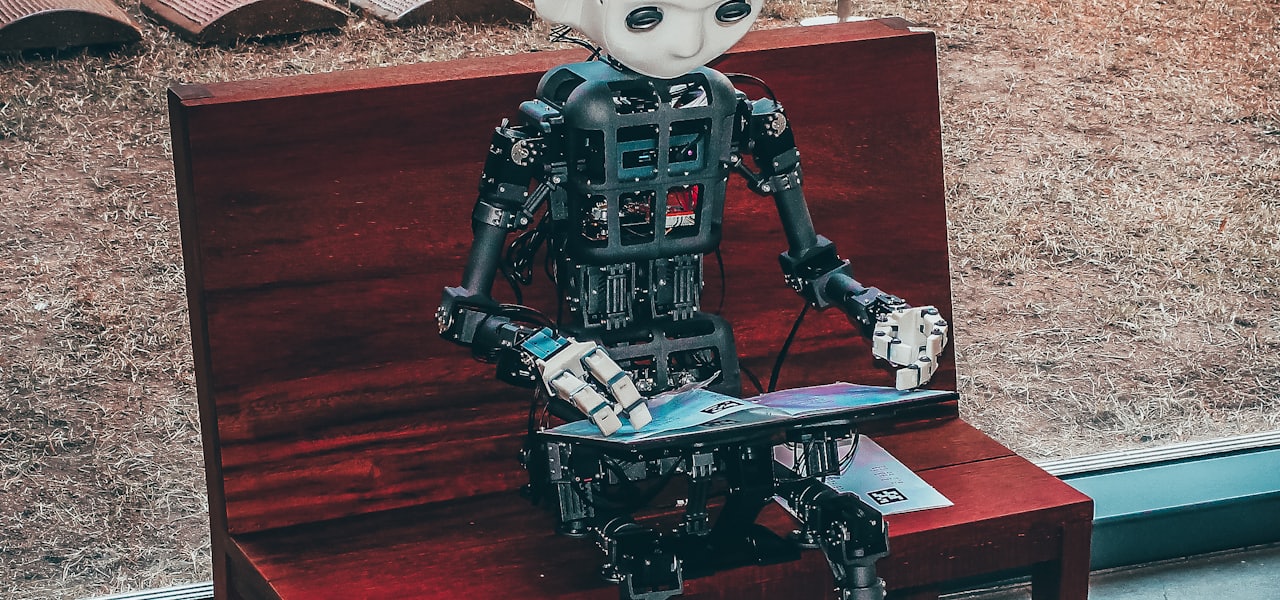
    Education by algorithm refers to automated solutions that algorithmic agents or social bots offer to education, to assist with mundane educational tasks. These are often instrumentalist “educational reforms” or “curriculum transformations”, which have been implemented by policy makers and are supported by proprietary education technologies. New educational policies, mandated by transnational governance forums (like the OECD), have manufactured a connection between economies and education. Governments, schools and universities are expected to introduce or prepare students for an “unknown future”, to “future proof” them against an identified issue or to mitigate a national crisis. Technologies are seen as a catalyst to effect these changes. However, these policies mask a deeper problem, which include the assetization of education and the use of technologies as a means for surveillance and behavior modification. The traces that students and leave, through cookies, logins learning activities, assignments and tests, are collected, facetted, and shared with commercial organizations by these agents, to both predict future behavior and shape it. Techno solutionist thinking has led to managers adopting educational policies and reforms, and looking towards technologies to act as disrupters, liberators or agents to improve efficiency. During the COVID-19 pandemic, many more students had to modify their learning and working circumstances to protect themselves. Academics shifted their assessment practices from the dominant assessment of learning paradigm to an orientation that saw value in "assessment for learning". Big tech assisted, and teaching infrastructure became further privatized, and unbundling of education provision went a step further. Following the return to class, this assessment paradigm became rationalised in education. Leaving the space for algorithmic agents to step in. Academics work was increasingly driven by learning experience platforms and student understanding was extended through interleaving, behavior modification nudges and rewards and scheduled high stakes assessments. This data collection may also be construed as surveillance., or perceived as evidence of a Fourth Industrial Revolution

    Read more →