AI Detector Most Like Turnitin

AI Detector Most Like Turnitin — independent reviews, comparisons, pricing and step-by-step guides on Aizhi.

  • Association for Computational Linguistics

    Association for Computational Linguistics

    The Association for Computational Linguistics (ACL) is a scientific and professional organization for people working on natural language processing. Its namesake conference is one of the primary high impact conferences for natural language processing research, along with EMNLP. The conference is held each summer in locations where significant computational linguistics research is carried out. It was founded in 1962, originally named the Association for Machine Translation and Computational Linguistics (AMTCL). It became the ACL in 1968. The ACL has a European (EACL), a North American (NAACL), and an Asian (AACL) chapter. == History == The ACL was founded in 1962 as the Association for Machine Translation and Computational Linguistics (AMTCL). The initial membership was about 100. In 1965, the AMTCL took over the journal Mechanical Translation and Computational Linguistics. This journal was succeeded by many other journals: the American Journal of Computational Linguistics (1974–1978, 1980–1983), and then Computational Linguistics (1984–present). Since 1988, the journal has been published for the ACL by MIT Press. The annual meeting was first held in 1963 in conjunction with the Association for Computing Machinery National Conference. The annual meeting was, for a long time, relatively informal and did not publish anything longer than abstracts. By 1968, the society took on its current name, the Association for Computational Linguistics (ACL). The publication of the annual meeting's Proceedings of the ACL began in 1979 and gradually matured into its modern form. Many of the meetings were held in conjunction with the Linguistic Society of America, and a few with the American Society for Information Science and the Cognitive Science Society. The United States government sponsored much research from 1989 to 1994, characterized by an increase in author retention rates and an increase in research in some key topics, such as speech recognition, in ACL. By the 21st century, it was able to maintain authors at a high rate who coalesced in a more stable arrangement around individual research topics. In 1991, the group published a prototype for a text generator based on the universal grammar theory of Noam Chomsky. The system, nicknamed Parrot, relied on a finite set of syntactic transformations and a hand-curated lexicon. Despite some initial success, including experimentation with morpheme syntactics, funding halted after the research team encountered intractable difficulties with inflection and abstract locutions. == Annual Meeting of the ACL == Every year, the ACL holds the Annual Meeting of the ACL. The location lies in Europe in years zero modulo three, North America in years one modulo three, and Asia–Australia in years two modulo three. In 2020, the Annual Meeting received for the first time more submissions from China than the United States. == Activities == The ACL organizes several of the top conferences and workshops in the field of computational linguistics and natural language processing. These include: Annual Meeting of the Association for Computational Linguistics (ACL), the flagship conference of the organization Empirical Methods in Natural Language Processing (EMNLP) International Joint Conference on Natural Language Processing (IJCNLP), held jointly one of the other conferences on a rotating basis Conference on Computational Natural Language Learning (CoNLL) Lexical and Computational Semantics and Semantic Evaluation (SemEval) Joint Conference on Lexical and Computational Semantics (SEM) Workshop on Statistical Machine Translation (WMT) Besides conferences, the ACL also sponsors the journals Computational Linguistics and Transactions of the Association for Computational Linguistics (TACL). Papers and other presentations at ACL and ACL-affiliated venues are archived online in the open-access ACL Anthology. == Special Interest Groups == ACL has a large number of Special Interest Groups (SIGs), focusing on specific areas of natural language processing. Some current SIGs within ACL are: == Presidents == Each year, the ACL elects a distinguished computational linguist who becomes vice-president of the organization in the next calendar year and president one year later. Recent ACL presidents are:

    Read more →
  • Cleverbot

    Cleverbot

    Cleverbot is a chatterbot web application. It was created by British AI scientist Rollo Carpenter and launched in October 2008. It was preceded by Jabberwacky, a chatbot project that began in 1988 and went online in 1997. In its first decade, Cleverbot held several thousand conversations with Carpenter and his associates. Since launching on the web, the number of conversations held has exceeded 150 million. Besides the web application, Cleverbot is also available as an iOS, Android, and Windows Phone app. == Operation == Cleverbot's responses are not pre-programmed because it learns from human input: Humans type into the box below the Cleverbot logo and the system finds all keywords or an exact phrase matching the input. After searching through its saved conversations, it responds to the input by finding how a human responded to that input when it was asked, in part or in full, by Cleverbot. Cleverbot participated in a formal Turing test at the 2011 Techniche festival at the Indian Institute of Technology Guwahati on 3 September 2011. Out of the 1334 votes cast, Cleverbot was judged to be 59.3% human, compared to the rating of 63.3% human achieved by human participants. A score of 50.05% or higher is often considered to be a passing grade. The software running for the event had to handle just 1 or 2 simultaneous requests, whereas online Cleverbot is usually talking to around 10,000 to 50,000 people at once. == Developments == Cleverbot is constantly growing in data size at the rate of 4 to 7 million interactions per day. Updates to the software have been mostly behind the scenes. In 2014, Cleverbot was upgraded to use GPU serving techniques. Unlike Eliza, the program does not respond in a fixed way, instead choosing its responses heuristically using fuzzy logic, the whole of the conversation being compared to the millions that have taken place before. Cleverbot now uses over 279 million interactions, about 3-4% of the data it has already accumulated. The developers of Cleverbot are attempting to build a new version using machine learning techniques. An app that uses the Cleverscript engine to play a game of 20 Questions has been launched under the name Clevernator. Unlike other such games, the player asks the questions and it is the role of the AI to understand, and answer factually. An app that allows owners to create and talk to their own small Cleverbot-like AI has been launched, called Cleverme! for Apple products. == In popular culture == Cleverbot received media attention after being featured in the popular 2010 creepypasta ARG web serial Ben Drowned by Alexander D. Hall. In early 2017, a Twitch stream of two Google Home devices modified to talk to each other using Cleverbot garnered over 700,000 visitors and over 30,000 peak concurrent viewers.

    Read more →
  • Production (computer science)

    Production (computer science)

    In computer science, a production or production rule is a rewrite rule that replaces some symbols with other symbols. A finite set of productions P {\displaystyle P} is the main component in the specification of a formal grammar (specifically a generative grammar). In such grammars, a set of productions is a special case of relation on the set of strings V ∗ {\displaystyle V^{}} (where ∗ {\displaystyle {}^{}} is the Kleene star operator) over a finite set of symbols V {\displaystyle V} called a vocabulary that defines which non-empty strings can be substituted with others. The set of productions is thus a special kind subset P ⊂ V ∗ × V ∗ {\displaystyle P\subset V^{}\times V^{}} and productions are then written in the form u → v {\displaystyle u\to v} to mean that ( u , v ) ∈ P {\displaystyle (u,v)\in P} (not to be confused with → {\displaystyle \to } being used as function notation, since there may be multiple rules for the same u {\displaystyle u} ). Given two subsets A , B ⊂ V ∗ {\displaystyle A,B\subset V^{}} , productions can be restricted to satisfy P ⊂ A × B {\displaystyle P\subset A\times B} , in which case productions are said "to be of the form A → B {\displaystyle A\to B} . Different choices and constructions of A , B {\displaystyle A,B} lead to different types of grammars. In general, any production of the form u → ϵ , {\displaystyle u\to \epsilon ,} where ϵ {\displaystyle \epsilon } is the empty string (sometimes also denoted λ {\displaystyle \lambda } ), is called an erasing rule, while productions that would produce strings out of nowhere, namely of the form ϵ → v , {\displaystyle \epsilon \to v,} are never allowed. In order to allow the production rules to create meaningful sentences, the vocabulary is partitioned into (disjoint) sets Σ {\displaystyle \Sigma } and N {\displaystyle N} providing two different roles: Σ {\displaystyle \Sigma } denotes the terminal symbols known as an alphabet containing the symbols allowed in a sentence; N {\displaystyle N} denotes nonterminal symbols, containing a distinguished start symbol S ∈ N {\displaystyle S\in N} , that are needed together with the production rules to define how to build the sentences. In the most general case of an unrestricted grammar, a production u → v {\displaystyle u\to v} , is allowed to map arbitrary strings u {\displaystyle u} and v {\displaystyle v} in V {\displaystyle V} (terminals and nonterminals), as long as u {\displaystyle u} is not empty. So unrestricted grammars have productions of the form V ∗ ∖ { ϵ } → V ∗ {\displaystyle V^{}\setminus \{\epsilon \}\to V^{}} or if we want to disallow changing finished sentences V ∗ N V ∗ = ( V ∗ ∖ Σ ∗ ) → V ∗ {\displaystyle V^{}NV^{}=(V^{}\setminus \Sigma ^{})\to V^{}} , where V ∗ N V ∗ {\displaystyle V^{}NV^{}} indicates concatenation and forces a non-terminal symbol to always be present on the left-hand side of the productions, and ∖ {\displaystyle \setminus } denotes set minus or set difference. If we do not allow the start symbol to occur in v {\displaystyle v} (the word on the right side), we have to replace V ∗ {\displaystyle V^{}} with ( V ∖ { S } ) ∗ {\displaystyle (V\setminus \{S\})^{}} on the right-hand side. The other types of formal grammar in the Chomsky hierarchy impose additional restrictions on what constitutes a production. Notably in a context-free grammar, the left-hand side of a production must be a single nonterminal symbol. So productions are of the form: N → V ∗ {\displaystyle N\to V^{}} == Grammar generation == To generate a string in the language, one begins with a string consisting of only a single start symbol, and then successively applies the rules (any number of times, in any order) to rewrite this string. This stops when a string containing only terminals is obtained. The language consists of all the strings that can be generated in this manner. Any particular sequence of legal choices taken during this rewriting process yields one particular string in the language. If there are multiple different ways of generating this single string, then the grammar is said to be ambiguous. For example, assume the alphabet consists of a {\displaystyle a} and b {\displaystyle b} , with the start symbol S {\displaystyle S} , and we have the following rules: 1. S → a S b {\displaystyle S\rightarrow aSb} 2. S → b a {\displaystyle S\rightarrow ba} then we start with S {\displaystyle S} , and can choose a rule to apply to it. If we choose rule 1, we replace S {\displaystyle S} with a S b {\displaystyle aSb} and obtain the string a S b {\displaystyle aSb} . If we choose rule 1 again, we replace S {\displaystyle S} with a S b {\displaystyle aSb} and obtain the string a a S b b {\displaystyle aaSbb} . This process is repeated until we only have symbols from the alphabet (i.e., a {\displaystyle a} and b {\displaystyle b} ). If we now choose rule 2, we replace S {\displaystyle S} with b a {\displaystyle ba} and obtain the string a a b a b b {\displaystyle aababb} , and are done. We can write this series of choices more briefly, using symbols: S ⇒ a S b ⇒ a a S b b ⇒ a a b a b b {\displaystyle S\Rightarrow aSb\Rightarrow aaSbb\Rightarrow aababb} . The language of the grammar is the set of all the strings that can be generated using this process: { b a , a b a b , a a b a b b , a a a b a b b b , … } {\displaystyle \{ba,abab,aababb,aaababbb,\dotsc \}} .

    Read more →
  • FloodAlerts

    FloodAlerts

    FloodAlerts is a software application, developed by software specialists Shoothill, which takes real-time flooding information, and displays the data on an interactive Bing map, updating and warning its users when they, their premises or the routes they need to travel could be at risk of flooding. == History == FloodAlerts was launched in 2012, originally as the world's first Facebook flood warning app. == Operation == FloodAlerts is made available free of charge to individuals. Users are able to set up their own monitored locations and receive alerts via the application or their Facebook wall if the locations they are monitoring are at imminent risk of flooding. Hosted in the Cloud, using the Microsoft Windows Azure platform, the FloodAlerts application processes the data received from the Environment Agency, automatically creates the required map tiles, pins and alerts and displays them on an interactive Bing map, updating the content every 15 minutes. Users are able to see the latest information on the map without having to refresh their browser. FloodAlerts can also be provided as a customised risk management solution to businesses that require infrastructure or asset safety monitoring in areas where water levels are rising or receding. == Awards and recognition == FloodAlerts has received The Guardian and Virgin Media Business's 2012 Innovation Nation Awards and was shortlisted as a finalist for a further two national awards: the UK IT Industry Awards for Innovation and Entrepreneurship and The Institution of Engineering and Technology Innovation Awards for Information Technology. == In the press == The FloodAlerts application was reviewed on the BBC website. It was also reviewed on BBC Click.

    Read more →
  • ReRites

    ReRites

    ReRites (also known as RERITES, ReadingRites, Big Data Poetry) is a literary work of "Human + A.I. poetry" by David Jhave Johnston that used neural network models trained to generate poetry which the author then edited. ReRites won the Robert Coover Award for a Work of Electronic Literature in 2022. == About the project == The ReRites project began as a daily rite of writing with a neural network, expanded into a series of performances from which video documentation has been published online, and concluded with a set of 12 books and an accompanying book of essays published by Anteism Books in 2019. In Electronic Literature, Scott Rettberg describes the early phases of the project in 2016, when it bore the preliminary name Big Data Poetry. Jhave (the artist name that David Jhave Johnston goes by) describes the process of writing ReRites as a rite: "Every morning for 2 hours (normally 6:30–8:30am) I get up and edit the poetic output of a neural net. Deleting, weaving, conjugating, lineating, cohering. Re-writing. Re-wiring authorship: hybrid augmented enhanced evolutionary". There is video documentation of the writing process. The human editing of the neural network's output is fundamental to this project, and Jhave gives examples of both unedited text extracts and his edited versions in publications about the project. Kyle Booten describes ReRites as "simultaneously dusty and outrageously verdant, monotonously sublime and speckled with beautiful and rare specimens". === Performances === ReRites was first shared with an audience through a series of performances where audience members and poets would participate in reading the automatically generated texts, which appeared on screen so fast that human readers could barely keep up. This has been described as allowing participants to "re-discover[..] the peculiar pleasures of being embodied", or, in Jhave's own words, as a space where human participants were "playing their wits and voices against an evocative infinite deep-learning muse". The first performance was at Brown University's Interrupt Festival in 2019. It has been performed many times since, including at the Barbican Centre in London and Anteism Books. === Print publications === For a single year Jhave published one book of poetry from the ReRites project each month. These twelve volumes are accompanied by a book of essays, all published by Anteism Books. The accompanying essays provide critical responses to the project from poets and scholars including Allison Parrish, Johanna Drucker, Kyle Booten, Stephanie Strickland, John Cayley, Lai-Tze Fan, Nick Montfort, Mairéad Byrne, and Chris Funkhouser. Allison Parrish notes elsewhere that these paratexts to ReRites serve a legitimising function for a genre of poetry that is not yet institutionally acknowledged. === Technical details === Starting in 2016 under the name Big Data Poetry, Jhave generated poems using, in his own words, "neural network code (..) adapted from three corporate github-hosted machine-learning libraries: TensorFlow (Google), PyTorch (Facebook), and AWD-LSTM (SalesForce)". He explains that the "models were trained on a customised corpus of 600,000 lines of poetry ranging from the romantic epoch to the 20th century avant garde". Jhave maintains a GitHub repository with some of the code supporting ReRites. == Reception == ReRites is described by John Cayley as "one of the most thorough and beautiful" poetic responses to machine learning. The work's influence on the field of electronic literature was acknowledged in 2022, when the work won the Electronic Literature Organization's Robert Coover Award for a Work of Electronic Literature. The jury described ReRites as particularly poignant in the time of the pandemic, as it was "a documentation of the performance of the private ritual of writing and the obsessive-compulsive need for writers to communicate — even when no one else is reading". The question of authorship and voice in ReRites has been raised by several critics. Although generated poetry is an established genre in electronic literature, Cayley notes that unlike the combinatory poems created by authors like Nick Montfort, where the author explicitly defines which words and phrases will be recombined, ReRites has "not been directed by literary preconceptions inscribed in the program itself, but only by patterns and rhythms pre-existing in the corpora". In an essay for the Australian journal TEXT, David Thomas Henry Wright asks how to understand authorship and authority in ReRites: "Who or what is the authority of the work? The original data fed into the machine, that is not currently retrievable or discernible from the final works? The code that was taken and adapted for his purposes? Or Jhave, the human editor?" Wright concludes that Jhave is the only actor with any intentionality and therefore the authority of the work. The centrality of the human editor is also emphasised by other scholars. In a chapter analysing ReRites Malthe Stavning Erslev argues that the machine learning misrepresents the dataset it is trained on. While ReRites uses 21st century neural networks, it has been compared to earlier literary traditions. Poet Victoria Stanton, who read at one of the ReRites performances, has compared ReRites to found poetry, while David Thomas Henry Wright compares it to the Oulipo movement and Mark Amerika to the cut-up technique. Scholars also position ReRites firmly within the long tradition of generative poetry both in electronic literature and print, stretching from the I Ching, Queneau's Cent Mille Milliards de Poemes and Nabokov's Pale Fire to computer-generated poems like Christopher Strachey's Love Letter Generator (1952) and more contemporary examples. Jhave describes the process of working with the output from the neural network as "carving". In his book My Life as an Artificial Creative Intelligence, Mark Amerika writes that the "method of carving the digital outputs provided by the language model as part of a collaborative remix jam session with GPT-2, where the language artist and the language model play off each other’s unexpected outputs as if caught in a live postproduction set, is one I share with electronic literature composer David Jhave Johnston, whose AI poetry experiments precede my own investigations."

    Read more →
  • Mean shift

    Mean shift

    Mean shift is a non-parametric feature-space mathematical analysis technique for locating the maxima of a density function, a so-called mode-seeking algorithm. Application domains include cluster analysis in computer vision and image processing. == History == The mean shift procedure is usually credited to work by Fukunaga and Hostetler in 1975. It is, however, reminiscent of earlier work by Schnell in 1964. == Overview == Mean shift is a procedure for locating the maxima—the modes—of a density function given discrete data sampled from that function. This is an iterative method, and we start with an initial estimate x {\displaystyle x} . Let a kernel function K ( x i − x ) {\displaystyle K(x_{i}-x)} be given. This function determines the weight of nearby points for re-estimation of the mean. Typically a Gaussian kernel on the distance to the current estimate is used, K ( x i − x ) = e − c | | x i − x | | 2 {\displaystyle K(x_{i}-x)=e^{-c||x_{i}-x||^{2}}} . The weighted mean of the density in the window determined by K {\displaystyle K} is m ( x ) = ∑ x i ∈ N ( x ) K ( x i − x ) x i ∑ x i ∈ N ( x ) K ( x i − x ) {\displaystyle m(x)={\frac {\sum _{x_{i}\in N(x)}K(x_{i}-x)x_{i}}{\sum _{x_{i}\in N(x)}K(x_{i}-x)}}} where N ( x ) {\displaystyle N(x)} is the neighborhood of x {\displaystyle x} , a set of points for which K ( x i − x ) ≠ 0 {\displaystyle K(x_{i}-x)\neq 0} . The difference m ( x ) − x {\displaystyle m(x)-x} is called mean shift in Fukunaga and Hostetler. The mean-shift algorithm now sets x ← m ( x ) {\displaystyle x\leftarrow m(x)} , and repeats the estimation until m ( x ) {\displaystyle m(x)} converges. Although the mean shift algorithm has been widely used in many applications, a rigid proof for the convergence of the algorithm using a general kernel in a high dimensional space is still not known. Aliyari Ghassabeh showed the convergence of the mean shift algorithm in one dimension with a differentiable, convex, and strictly decreasing profile function. However, the one-dimensional case has limited real world applications. Also, the convergence of the algorithm in higher dimensions with a finite number of the stationary (or isolated) points has been proved. However, sufficient conditions for a general kernel function to have finite stationary (or isolated) points have not been provided. Gaussian Mean-Shift is an Expectation–maximization algorithm. == Details == Let data be a finite set S {\displaystyle S} embedded in the n {\displaystyle n} -dimensional Euclidean space, X {\displaystyle X} . Let K {\displaystyle K} be a flat kernel that is the characteristic function of the λ {\displaystyle \lambda } -ball in X {\displaystyle X} , In each iteration of the algorithm, s ← m ( s ) {\displaystyle s\leftarrow m(s)} is performed for all s ∈ S {\displaystyle s\in S} simultaneously. The first question, then, is how to estimate the density function given a sparse set of samples. One of the simplest approaches is to just smooth the data, e.g., by convolving it with a fixed kernel of width h {\displaystyle h} , where x i {\displaystyle x_{i}} are the input samples and k ( r ) {\displaystyle k(r)} is the kernel function (or Parzen window). h {\displaystyle h} is the only parameter in the algorithm and is called the bandwidth. This approach is known as kernel density estimation or the Parzen window technique. Once we have computed f ( x ) {\displaystyle f(x)} from the equation above, we can find its local maxima using gradient ascent or some other optimization technique. The problem with this "brute force" approach is that, for higher dimensions, it becomes computationally prohibitive to evaluate f ( x ) {\displaystyle f(x)} over the complete search space. Instead, mean shift uses a variant of what is known in the optimization literature as multiple restart gradient descent. Starting at some guess for a local maximum, y k {\displaystyle y_{k}} , which can be a random input data point x 1 {\displaystyle x_{1}} , mean shift computes the gradient of the density estimate f ( x ) {\displaystyle f(x)} at y k {\displaystyle y_{k}} and takes an uphill step in that direction. == Types of kernels == Kernel definition: Let X {\displaystyle X} be the n {\displaystyle n} -dimensional Euclidean space, R n {\displaystyle \mathbb {R} ^{n}} . The norm of x {\displaystyle x} is a non-negative number, ‖ x ‖ 2 = x ⊤ x ≥ 0 {\displaystyle \|x\|^{2}=x^{\top }x\geq 0} . A function K : X → R {\displaystyle K:X\rightarrow \mathbb {R} } is said to be a kernel if there exists a profile, k : [ 0 , ∞ ] → R {\displaystyle k:[0,\infty ]\rightarrow \mathbb {R} } , such that K ( x ) = k ( ‖ x ‖ 2 ) {\displaystyle K(x)=k(\|x\|^{2})} and k is non-negative. k is non-increasing: k ( a ) ≥ k ( b ) {\displaystyle k(a)\geq k(b)} if a < b {\displaystyle a Read more →

  • DreamLab

    DreamLab

    DreamLab was a volunteer computing Android and iOS app launched in 2015 by Imperial College London and the Vodafone Foundation. It was discontinued on 2nd April 2025. == Description == The app helped to research cancer, COVID-19, new drugs and tropical cyclones. To do this, DreamLab accessed part of the device's processing power, with the user's consent, while the owner charged their smartphone, to speed up the calculations of the algorithms from Imperial College London. The aim of the tropical cyclone project was to prepare for climate change risks. Other projects aimed to find existing drugs and food molecules that could help people with COVID-19 and other diseases. The performance of 100,000 smartphones would reach the annual output of all research computers at Imperial College in just three months, with a nightly runtime of six hours. The app was developed in 2015 by the Garvan Institute of Medical Research in Sydney and the Vodafone Foundation. In May 2020, the project had over 490,000 registered users.

    Read more →
  • Neural radiance field

    Neural radiance field

    A neural radiance field (NeRF) is a neural field for reconstructing a three-dimensional representation of a scene from two-dimensional images. The NeRF model enables downstream applications of novel view synthesis, scene geometry reconstruction, and obtaining the reflectance properties of the scene. Additional scene properties such as camera poses may also be jointly learned. First introduced in 2020, it has since gained significant attention for its potential applications in computer graphics and content creation. == Algorithm == The NeRF algorithm represents a scene as a radiance field parametrized by a deep neural network (DNN). The network predicts a volume density and view-dependent emitted radiance given the spatial location ( x , y , z ) {\displaystyle (x,y,z)} and viewing direction in Euler angles ( θ , Φ ) {\displaystyle (\theta ,\Phi )} of the camera. By sampling many points along camera rays, traditional volume rendering techniques can produce an image. === Data collection === A NeRF needs to be retrained for each unique scene. The first step is to collect images of the scene from different angles and their respective camera pose. These images are standard 2D images and do not require a specialized camera or software. Any camera is able to generate datasets, provided the settings and capture method meet the requirements for SfM (Structure from Motion). This requires tracking of the camera position and orientation, often through some combination of SLAM, GPS, or inertial estimation. Researchers often use synthetic data to evaluate NeRF and related techniques. For such data, images (rendered through traditional non-learned methods) and respective camera poses are reproducible and error-free. === Training === For each sparse viewpoint (image and camera pose) provided, camera rays are marched through the scene, generating a set of 3D points with a given radiance direction (into the camera). For these points, volume density and emitted radiance are predicted using the multi-layer perceptron (MLP). An image is then generated through classical volume rendering. Because this process is fully differentiable, the error between the predicted image and the original image can be minimized with gradient descent over multiple viewpoints, encouraging the MLP to develop a coherent model of the scene. == Variations and improvements == Early versions of NeRF were slow to optimize and required that all input views were taken with the same camera in the same lighting conditions. These performed best when limited to orbiting around individual objects, such as a drum set, plants or small toys. Since the original paper in 2020, many improvements have been made to the NeRF algorithm, with variations for special use cases. === Fourier feature mapping === In 2020, shortly after the release of NeRF, the addition of Fourier Feature Mapping improved training speed and image accuracy. Deep neural networks struggle to learn high frequency functions in low dimensional domains; a phenomenon known as spectral bias. To overcome this shortcoming, points are mapped to a higher dimensional feature space before being fed into the MLP. γ ( v ) = [ a 1 cos ⁡ ( 2 π B 1 T v ) a 1 sin ⁡ ( 2 π B 1 T v ) ⋮ a m cos ⁡ ( 2 π B m T v ) a m sin ⁡ ( 2 π B m T v ) ] {\displaystyle \gamma (\mathrm {v} )={\begin{bmatrix}a_{1}\cos(2{\pi }{\mathrm {B} }_{1}^{T}\mathrm {v} )\\a_{1}\sin(2\pi {\mathrm {B} }_{1}^{T}\mathrm {v} )\\\vdots \\a_{m}\cos(2{\pi }{\mathrm {B} }_{m}^{T}\mathrm {v} )\\a_{m}\sin(2{\pi }{\mathrm {B} }_{m}^{T}\mathrm {v} )\end{bmatrix}}} Where v {\displaystyle \mathrm {v} } is the input point, B i {\displaystyle \mathrm {B} _{i}} are the frequency vectors, and a i {\displaystyle a_{i}} are coefficients. This allows for rapid convergence to high frequency functions, such as pixels in a detailed image. === Bundle-adjusting neural radiance fields === One limitation of NeRFs is the requirement of knowing accurate camera poses to train the model. Often times, pose estimation methods are not completely accurate, nor is the camera pose even possible to know. These imperfections result in artifacts and suboptimal convergence. So, a method was developed to optimize the camera pose along with the volumetric function itself. Called Bundle-Adjusting Neural Radiance Field (BARF), the technique uses a dynamic low-pass filter (DLPF) to go from coarse to fine adjustment, minimizing error by finding the geometric transformation to the desired image. This corrects imperfect camera poses and greatly improves the quality of NeRF renders. === Multiscale representation === Conventional NeRFs struggle to represent detail at all viewing distances, producing blurry images up close and overly aliased images from distant views. In 2021, researchers introduced a technique to improve the sharpness of details at different viewing scales known as mip-NeRF (comes from mipmap). Rather than sampling a single ray per pixel, the technique fits a gaussian to the conical frustum cast by the camera. This improvement effectively anti-aliases across all viewing scales. mip-NeRF also reduces overall image error and is faster to converge at about half the size of ray-based NeRF. === Learned initializations === In 2021, researchers applied meta-learning to assign initial weights to the MLP. This rapidly speeds up convergence by effectively giving the network a head start in gradient descent. Meta-learning also allowed the MLP to learn an underlying representation of certain scene types. For example, given a dataset of famous tourist landmarks, an initialized NeRF could partially reconstruct a scene given one image. === NeRF in the wild === Conventional NeRFs are vulnerable to slight variations in input images (objects, lighting) often resulting in ghosting and artifacts. As a result, NeRFs struggle to represent dynamic scenes, such as bustling city streets with changes in lighting and dynamic objects. In 2021, researchers at Google developed a new method for accounting for these variations, named NeRF in the Wild (NeRF-W). This method splits the neural network (MLP) into three separate models. The main MLP is retained to encode the static volumetric radiance. However, it operates in sequence with a separate MLP for appearance embedding (changes in lighting, camera properties) and an MLP for transient embedding (changes in scene objects). This allows the NeRF to be trained on diverse photo collections, such as those taken by mobile phones at different times of day. === Relighting === In 2021, researchers added more outputs to the MLP at the heart of NeRFs. The output now included: volume density, surface normal, material parameters, distance to the first surface intersection (in any direction), and visibility of the external environment in any direction. The inclusion of these new parameters lets the MLP learn material properties, rather than pure radiance values. This facilitates a more complex rendering pipeline, calculating direct and global illumination, specular highlights, and shadows. As a result, the NeRF can render the scene under any lighting conditions with no re-training. === Plenoctrees === Although NeRFs had reached high levels of fidelity, their costly compute time made them useless for many applications requiring real-time rendering, such as VR/AR and interactive content. Introduced in 2021, Plenoctrees (plenoptic octrees) enabled real-time rendering of pre-trained NeRFs through division of the volumetric radiance function into an octree. Rather than assigning a radiance direction into the camera, viewing direction is taken out of the network input and spherical radiance is predicted for each region. This makes rendering over 3000x faster than conventional NeRFs. === Sparse Neural Radiance Grid === Similar to Plenoctrees, this method enabled real-time rendering of pretrained NeRFs. To avoid querying the large MLP for each point, this method bakes NeRFs into Sparse Neural Radiance Grids (SNeRG). A SNeRG is a sparse voxel grid containing opacity and color, with learned feature vectors to encode view-dependent information. A lightweight, more efficient MLP is then used to produce view-dependent residuals to modify the color and opacity. To enable this compressive baking, small changes to the NeRF architecture were made, such as running the MLP once per pixel rather than for each point along the ray. These improvements make SNeRG extremely efficient, outperforming Plenoctrees. === Instant NeRFs === In 2022, researchers at Nvidia enabled real-time training of NeRFs through a technique known as Instant Neural Graphics Primitives. An innovative input encoding reduces computation, enabling real-time training of a NeRF, an improvement orders of magnitude above previous methods. The speedup stems from the use of spatial hash functions, which have O ( 1 ) {\displaystyle O(1)} access times, and parallelized architectures which run fast on modern GPUs. == Related techniques == === Plenoxels === Plen

    Read more →
  • Character computing

    Character computing

    Character computing is a trans-disciplinary field of research at the intersection of computer science and psychology. It is any computing that incorporates the human character within its context. Character is defined as all features or characteristics defining an individual and guiding their behavior in a specific situation. It consists of stable trait markers (e.g., personality, background, history, socio-economic embeddings, culture,...) and variable state markers (emotions, health, cognitive state, ...). Character computing aims at providing a holistic psychologically driven model of human behavior. It models and predicts behavior based on the relationships between a situation and character. Three main research modules fall under the umbrella of character computing: character sensing and profiling, character-aware adaptive systems, and artificial characters. == Overview == Character computing can be viewed as an extension of the well-established field of affective computing. Based on the foundations of the different psychology branches, it advocates defining behavior as a compound attribute that is not driven by either personality, emotions, situation or cognition alone. It rather defines behavior as a function of everything that makes up an individual i.e., their character and the situation they are in. Affective computing aims at allowing machines to understand and translate the non-verbal cues of individuals into affect. Accordingly, character computing aims at understanding the character attributes of an individual and the situation to translate it to predicted behavior, and vice versa. ''In practical terms, depending on the application context, character computing is a branch of research that deals with the design of systems and interfaces that can observe, sense, predict, adapt to, affect, understand, or simulate the following: character based on behavior and situation, behavior based on character and situation, or situation based on character and behavior.'' The Character-Behavior-Situation (CBS) triad is at the core of character computing and defines each of the three edges based on the other two. Character computing relies on simultaneous development from a computational and psychological perspective and is intended to be used by researchers in both fields. Its main concept is aligning the computational model of character computing with empirical results from in-lab and in-the-wild psychology experiments. The model is to be continuously built and validated through the emergence of new data. Similar to affective and personality computing, the model is to be used as a base for different applications towards improving user experience. == History == Character computing as such was first coined in its first workshop in 2017. Since then it has had 3 international workshops and numerous publications. Despite its young age, it has already drawn some interest in the research community, leading to the publication of the first book under the same title in early 2020 published by Springer Nature. Research that can be categorized under the field dates much older than 2017. The notion of combining several factors towards the explanation of behavior or traits and states has long been investigated in both Psychology and Computer Science, for example. == Character == The word character originates from the Greek word meaning “stamping tool”, referring to distinctive features and traits. Over the years it has been given many different connotations, like the moral character in philosophy, the temperament in psychology, a person in literature or an avatar in various virtual worlds, including video games. According to character computing character is a unification of all the previous definitions, by referring back to the original meaning of the word. Character is defined as the holistic concept representing all interacting trait and state markers that distinguish an individual. Traits are characteristics that mainly remain stable over time. Traits include personality, affect, socio-demographics, and general health. States are characteristics that vary in short periods of time. They include emotions, well-being, health, cognitive state. Each characteristic has many representation methods and psychological models. The different models can be combined or one model can be preset for each characteristic. This depends on the use-case and the design choices. == Areas == Research into character computing can be divided into three areas, which complement each other but can each be investigated separately. The first area is sensing and predicting character states and traits or ensuing behavior. The second area is adapting applications to certain character states or traits and the behavior they predict. It also deals with trying to change or monitor such behavior. The final area deals with creating artificial agents e.g., chatbots or virtual reality avatars that exhibit certain characteristics. The three areas are investigated separately and build on existing findings in the literature. The results of each of the three areas can also be used as a stepping stone for the next area. Each of the three areas has already been investigated on its own in different research fields with focus on different subsets of character. For example, affective computing and personality computing both cover different areas with a focus on some character components without the others to account for human behavior. == The Character-Behavior-Situation triad == Character computing is based on a holistic psychologically driven model of human behavior. Human behavior is modeled and predicted based on the relationships between a situation and a human's character. To further define character in a more formal or holistic manner, we represent it in light of the Character–Behavior–Situation triad. This highlights that character not only determines who we are but how we are, i.e., how we behave. The triad investigated in Personality Psychology is extended through character computing to the Character–Behavior–Situation triad. Any member of the CBS triad is a function of the two other members, e.g., given the situation and personality, the behavior can be predicted. Each of the components in the triad can be further decomposed into smaller units and features that may best represent the human's behavior or character in a particular situation. Character is thus behind a person's behavior in any given situation. While this is a causality relation, the correlation between the three components is often more easily used to predict the components that are most difficult to measure from those measured more easily. There are infinitely many components to include in the representation of any of C, B, and S. The challenge is always to choose the smallest subset needed for prediction of a person's behavior in a particular situation.

    Read more →
  • Jais (language model)

    Jais (language model)

    Jais is an open-source large language model launched in August 2023. Developed as a collaboration between Emirati AI company G42, the Mohamed bin Zayed University of Artificial Intelligence (MBZUAI), and US-based Cerebras Systems, Jais was designed to produce high-quality Arabic text and was also trained on English data. The model's creation was motivated by the underrepresentation of the Arabic language in the field of generative artificial intelligence. It aims to provide a more culturally and linguistically accurate model for the world's 400 million Arabic speakers. Its name is a reference to Jebel Jais, the highest mountain in the UAE. == Background and development == Jais was developed in response to the limited availability of advanced generative artificial intelligence models for the Arabic language, despite it being spoken by over 400 million people. Existing models were often trained on limited or low-quality Arabic web content, resulting in poor performance. The project represents a significant investment by the United Arab Emirates in the field of AI as part of its national strategy. The model was created through a partnership between Inception (now Core42), a subsidiary of the Abu Dhabi-based AI company G42; the Mohamed bin Zayed University of Artificial Intelligence (MBZUAI); and Cerebras Systems, a US company specializing in AI hardware. The model is named after Jebel Jais, the highest peak in the UAE. == Training == The initial version of Jais released in August 2023 had 13 billion parameters. In November 2023, Core42 released Jais 30B, an improved version with 30 billion parameters. Both models were trained on a subset of the Cerebras Condor Galaxy 1 supercomputer. The training dataset consisted of a mix of Arabic, English, and computer code. According to Timothy Baldwin, a professor of natural language processing at MBZUAI, training the model on a diverse Arabic dataset allows it to switch between dialects. == Features == Jais is designed to generate text in both English and Arabic. The project has also released instruction-tuned "Chat" variants for both the 13B and 30B models, which are specifically optimized for conversational applications. Additional functionality for working with images, graphs, and tabular data is planned for future releases.

    Read more →
  • Visual temporal attention

    Visual temporal attention

    Visual temporal attention is a special case of visual attention that involves directing attention to specific instant of time. Similar to its spatial counterpart visual spatial attention, these attention modules have been widely implemented in video analytics in computer vision to provide enhanced performance and human interpretable explanation of deep learning models. As visual spatial attention mechanism allows human and/or computer vision systems to focus more on semantically more substantial regions in space, visual temporal attention modules enable machine learning algorithms to emphasize more on critical video frames in video analytics tasks, such as human action recognition. In convolutional neural network-based systems, the prioritization introduced by the attention mechanism is regularly implemented as a linear weighting layer with parameters determined by labeled training data. == Application in Action Recognition == Recent video segmentation algorithms often exploits both spatial and temporal attention mechanisms. Research in human action recognition has accelerated significantly since the introduction of powerful tools such as Convolutional Neural Networks (CNNs). However, effective methods for incorporation of temporal information into CNNs are still being actively explored. Motivated by the popular recurrent attention models in natural language processing, the Attention-aware Temporal Weighted CNN (ATW CNN) is proposed in videos, which embeds a visual attention model into a temporal weighted multi-stream CNN. This attention model is implemented as temporal weighting and it effectively boosts the recognition performance of video representations. Besides, each stream in the proposed ATW CNN framework is capable of end-to-end training, with both network parameters and temporal weights optimized by stochastic gradient descent (SGD) with back-propagation. Experimental results show that the ATW CNN attention mechanism contributes substantially to the performance gains with the more discriminative snippets by focusing on more relevant video segments. == Literature == Seibold VC, Balke J and Rolke B (2023): Temporal attention. Front. Cognit. 2:1168320. doi: 10.3389/fcogn.2023.1168320.

    Read more →
  • LaMDA

    LaMDA

    LaMDA (Language Model for Dialogue Applications) is a family of conversational large language models developed by Google. Originally developed and introduced as Meena in 2020, the first-generation LaMDA was announced during the 2021 Google I/O keynote, while the second generation was announced the following year. In June 2022, LaMDA gained widespread attention when Google engineer Blake Lemoine made claims that the chatbot had become sentient. The scientific community has largely rejected Lemoine's claims, though it has led to conversations about the efficacy of the Turing test, which measures whether a computer can pass for a human. In February 2023, Google announced Gemini (then Bard), a conversational artificial intelligence chatbot powered by LaMDA, to counter the rise of OpenAI's ChatGPT. == History == === Background === On January 28, 2020, Google unveiled Meena, a neural network-powered chatbot with 2.6 billion parameters, which Google claimed to be superior to all other existing chatbots. The company previously hired computer scientist Ray Kurzweil in 2012 to develop multiple chatbots for the company, including one named Danielle. The Google Brain research team, who developed Meena, hoped to release the chatbot to the public in a limited capacity, but corporate executives refused on the grounds that Meena violated Google's "AI principles around safety and fairness". Meena was later renamed LaMDA as its data and computing power increased, and the Google Brain team again sought to deploy the software to the Google Assistant, the company's virtual assistant software, in addition to opening it up to a public demo. Both requests were once again denied by company leadership. LaMDA's two lead researchers, Daniel de Freitas and Noam Shazeer, eventually left the company in frustration. === First generation === Google announced the LaMDA conversational large language model during the Google I/O keynote on May 18, 2021, powered by artificial intelligence. The acronym stands for "Language Model for Dialogue Applications". Built on the seq2seq architecture, transformer-based neural networks developed by Google Research in 2017, LaMDA was trained on human dialogue and stories, allowing it to engage in open-ended conversations. Google states that responses generated by LaMDA have been ensured to be "sensible, interesting, and specific to the context". LaMDA has access to multiple symbolic text processing systems, including a database, a real-time clock and calendar, a mathematical calculator, and a natural language translation system, giving it superior accuracy in tasks supported by those systems, and making it among the first dual process chatbots. LaMDA is also not stateless because its "sensibleness" metric is fine-tuned by "pre-conditioning" each dialog turn by prepending many of the most recent dialog interactions, on a user-by-user basis. LaMDA is tuned on nine unique performance metrics: sensibleness, specificity, interestingness, safety, groundedness, informativeness, citation accuracy, helpfulness, and role consistency. Tests by Google indicated that LaMDA surpassed human responses in the area of interestingness. The pre-training dataset consists of 2.97B documents, 1.12B dialogs, and 13.39B utterances, for a total of 1.56T words. The largest LaMDA model has 137B non-embedding parameters. === Second generation === On May 11, 2022, Google unveiled LaMDA 2, the successor to LaMDA, during the 2022 Google I/O keynote. The new incarnation of the model draws examples of text from numerous sources, using it to formulate unique "natural conversations" on topics that it may not have been trained to respond to. === Sentience claims === On June 11, 2022, The Washington Post reported that Google engineer Blake Lemoine had been placed on paid administrative leave after Lemoine told company executives Blaise Agüera y Arcas and Jen Gennai that LaMDA had become sentient. Lemoine came to this conclusion after the chatbot made questionable responses to questions regarding self-identity, moral values, religion, and Isaac Asimov's Three Laws of Robotics. Google refuted these claims, insisting that there was substantial evidence to indicate that LaMDA was not sentient. In an interview with Wired, Lemoine reiterated his claims that LaMDA was "a person" as dictated by the Thirteenth Amendment to the U.S. Constitution, comparing it to an "alien intelligence of terrestrial origin". He further revealed that he had been dismissed by Google after he hired an attorney on LaMDA's behalf after the chatbot requested that Lemoine do so. On July 22, Google fired Lemoine, asserting that Blake had violated their policies "to safeguard product information" and rejected his claims as "wholly unfounded". Internal controversy instigated by the incident prompted Google executives to decide against releasing LaMDA to the public, which it had previously been considering. Lemoine's claims were widely pushed back by the scientific community. Many experts rejected the idea that LaMDA was sentient, including former New York University psychology professor Gary Marcus, David Pfau of Google sister company DeepMind, Erik Brynjolfsson of the Institute for Human-Centered Artificial Intelligence at Stanford University, and University of Surrey professor Adrian Hilton. Yann LeCun, who leads Meta Platforms' AI research team, stated that neural networks such as LaMDA were "not powerful enough to attain true intelligence". University of California, Santa Cruz professor Max Kreminski noted that LaMDA's architecture did not "support some key capabilities of human-like consciousness" and that its neural network weights were "frozen", assuming it was a typical large language model. Philosopher Nick Bostrom noted, however, that the lack of precise and consensual criteria for determining whether a system is conscious warrants some uncertainty. IBM Watson lead developer David Ferrucci compared how LaMDA appeared to be human in the same way Watson did when it was first introduced. Former Google AI ethicist Timnit Gebru called Lemoine a victim of a "hype cycle" initiated by researchers and the media. Lemoine's claims have also generated discussion on whether the Turing test remained useful to determine researchers' progress toward achieving artificial general intelligence, with Will Omerus of the Post opining that the test actually measured whether machine intelligence systems were capable of deceiving humans, while Brian Christian of The Atlantic said that the controversy was an instance of the ELIZA effect. == Products == === AI Test Kitchen === With the unveiling of LaMDA 2 in May 2022, Google also launched the AI Test Kitchen, a mobile application for the Android operating system powered by LaMDA capable of providing lists of suggestions on-demand based on a complex goal. Originally open only to Google employees, the app was set to be made available to "select academics, researchers, and policymakers" by invitation sometime in the year. In August, the company began allowing users in the U.S. to sign up for early access. In November, Google released a "season 2" update to the app, integrating a limited form of Google Brain's Imagen text-to-image model. A third iteration of the AI Test Kitchen was in development by January 2023, expected to launch at I/O later that year. Following the 2023 I/O keynote in May, Google added MusicLM, an AI-powered music generator first previewed in January, to the AI Test Kitchen app. In August, the app was delisted from Google Play and the Apple App Store, instead moving completely online. === Bard === On February 6, 2023, Google announced Bard, a conversational AI chatbot powered by LaMDA, in response to the unexpected popularity of OpenAI's ChatGPT chatbot. Google positions the chatbot as a "collaborative AI service" rather than a search engine. Bard became available for early access on March 21. === Other products === In addition to Bard, Pichai also unveiled the company's Generative Language API, an application programming interface also based on LaMDA, which he announced would be opened up to third-party developers in March 2023. == Architecture == LaMDA is a decoder-only Transformer language model. It is pre-trained on a text corpus that includes both documents and dialogs consisting of 1.56 trillion words, and is then trained with fine-tuning data generated by manually annotated responses for "sensibleness, interestingness, and safety". LaMDA was retrieval-augmented to improve the accuracy of facts provided to the user. Three different models were tested, with the largest having 137 billion non-embedding parameters:

    Read more →
  • AI browser

    AI browser

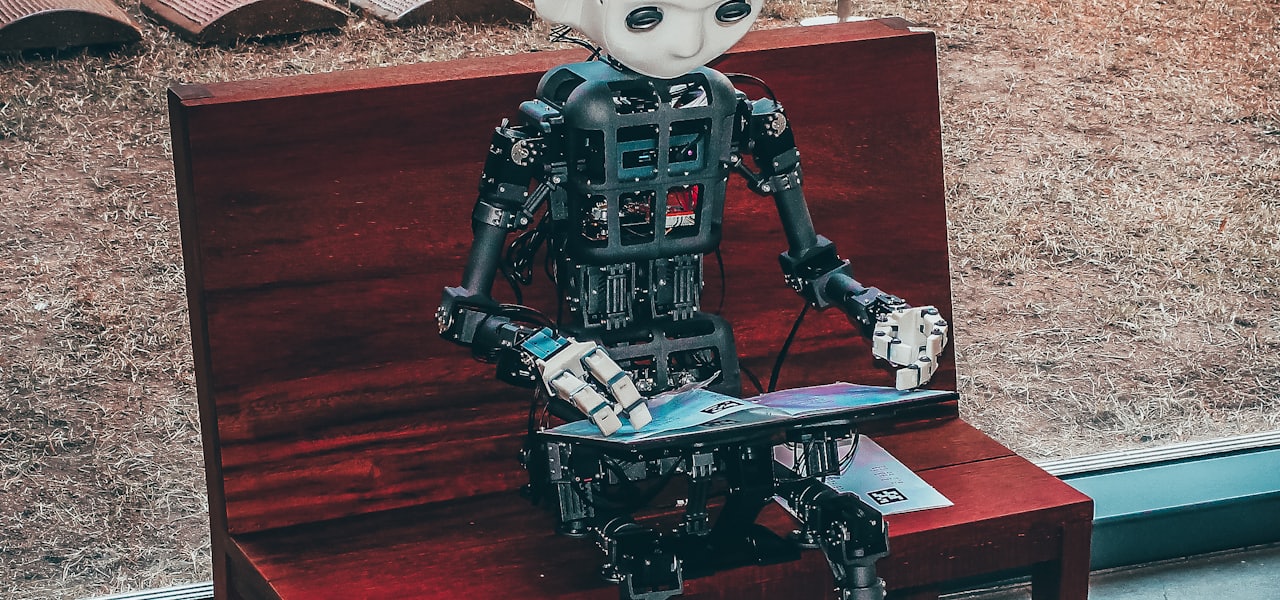
    An AI browser is a web browser with integrated artificial intelligence capabilities, such as automatically summarizing web page content or answering questions about it. A more specialized type is an agentic browser, based on the concept of agentic AI, which can take actions – such as navigating webpages or filling out forms – on behalf of the user. Several agentic browsers emerged in 2025, including ChatGPT Atlas (macOS only), Comet, and Dia. As of 2025, this is a recent development in the browser market, including new entrants from OpenAI, Opera and Perplexity. The designation of 'AI browser' also includes established browsers that later added non-agentic AI features, such as Microsoft Edge with the Copilot chatbot, Google Chrome with the Gemini chatbot (for Windows desktop users in the US with their language set to English), and Firefox with multiple chatbot providers (such as ChatGPT, Claude, Copilot, Gemini, and Le Chat). AI browsers have been noted to be susceptible to prompt injection attacks. == Browser extensions and integrations == Rather than creating entirely new browsers, some AI browsing solutions integrate with existing browsers through extensions or companion applications. These tools add agentic capabilities to established browsers without requiring users to switch platforms. Examples include Composite, which functions as a cross-browser agent that works with Chrome, Edge, and other browsers to automate web-based tasks for workers. == Cloud-based implementations == Cloud-based implementations of AI browsers allow users to run automated browsing agents without local installation. These systems operate on remote servers using frameworks such as Puppeteer or Playwright. Examples include Browserbase, Browser-use and AI Browser. The AI typically parses the Document Object Model (DOM) to locate and interact with page elements, and may also analyze browser screenshots to interpret layout and structure. == Criticisms and dangers == AI browsers have been noted to be susceptible to being vulnerable to prompt injection attacks, in which the content of websites can be used to hijack the control of the browser. Multiple organisations have argued against using AI browsers due to this vulnerability. The United Kingdom national cyber security centre and Gartner consider them to be too risky for adoption by most organisations. A study by the CISPA Helmholtz Center and Saarland University concluded that this vulnerability makes them easy targets for malware, fraud, automated defamation, disinformation and biased outputs.

    Read more →
  • Keka HR

    Keka HR

    Keka HR is a software company that provides cloud-based human resource management and payroll automation software. Keka HR specializes in providing business services in the field of HR technology, payroll automation, recruiting, leave, attendance and performance management. The company was founded by Vijay Yalamanchili on July 21, 2014. The company is headquartered in Hyderabad, with operations in Singapore and the United States. == History == Keka HR was established in 2014 in Hyderabad, Telangana, India. In 2015, the company entered the Indian HR market and received the HYSEA Startup Award. By 2019, Keka HR had surpassed $1 million in annual recurring revenue (ARR). During the COVID-19 pandemic in 2020, the company reported a sevenfold increase in sales. By 2021, the company had raised $1.6 million through Recur Club. In 2022, Keka HR secured $57 million in Series A funding from West Bridge Capital. The company's headquarters are located in Gachibowli, Hyderabad, with offices in Singapore and Seattle, Washington.

    Read more →
  • Dr. Sbaitso

    Dr. Sbaitso

    Dr. Sbaitso ( SPAYT-soh) is an artificial intelligence speech synthesis program released late in 1991 by Creative Labs in Singapore for MS-DOS-based personal computers. The name is an acronym for "SoundBlaster Acting Intelligent Text-to-Speech Operator." == History == Dr. Sbaitso was distributed with various sound cards manufactured by Creative Technology in the early 1990s. The text-to-speech engine used is a version of Monologue, which was developed by First Byte Software. Monologue is a later release of First Byte's "SmoothTalker" software from 1984. The program "conversed" with the user as if it were a psychologist, though most of its responses were along the lines of "WHY DO YOU FEEL THAT WAY?" rather than any sort of complicated interaction. When confronted with a phrase it could not understand, it would often reply with something such as "THAT'S NOT MY PROBLEM." Dr. Sbaitso repeated text out loud that was typed after the word "SAY." Repeated swearing or abusive behavior on the part of the user caused Dr. Sbaitso to "break down" in a "PARITY ERROR" before resetting itself. The same would happen, if the user types "SAY PARITY." The program introduced itself with the following lines: HELLO [UserName], MY NAME IS DOCTOR SBAITSO. I AM HERE TO HELP YOU. SAY WHATEVER IS IN YOUR MIND FREELY, OUR CONVERSATION WILL BE KEPT IN STRICT CONFIDENCE. MEMORY CONTENTS WILL BE WIPED OFF AFTER YOU LEAVE, SO, TELL ME ABOUT YOUR PROBLEMS. The program was designed to showcase the digitized voices the cards were able to produce, though the quality was far from lifelike. Additionally, there was a version of this program for Microsoft Windows through the use of a program called Prody Parrot; this version of the software featured a more detailed graphical user interface. The text-to-speech was also used as the voice of 1st Prize from the Baldi's Basics series, albeit slowed down. == Commands == If the user submits "HELP", a list of commands will appear. If the user then submits "M", more commands will appear. There are three pages of commands in total, with guidance on how to use each of the features.

    Read more →