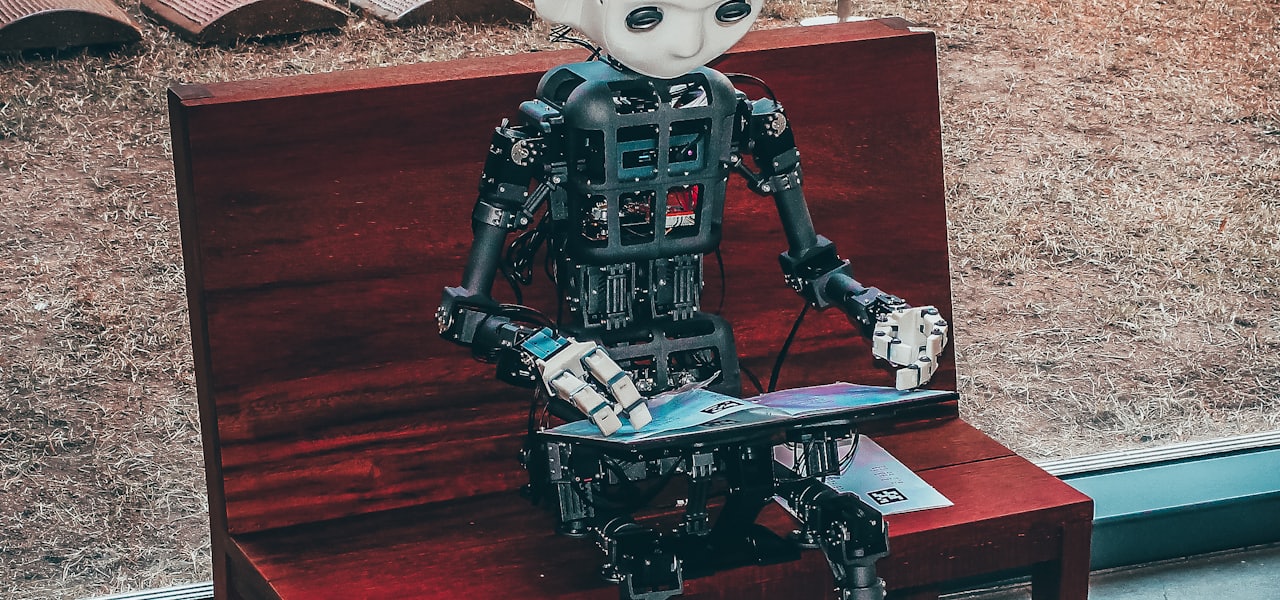
Algorithmic bias describes systematic and repeatable harmful tendency in a computerized sociotechnical system to create "unfair" outcomes, such as "privileging" one category over another in ways that may or may not be different from the intended function of the algorithm. Bias can emerge from many factors, including intentionally biased design decisions or the unintended or unanticipated use or decisions relating to the way data is coded, collected, selected or used to train the algorithm. For example, algorithmic bias has been observed in search engine results and social media platforms. This bias can have impacts ranging from privacy violations to reinforcing social biases of race, gender, sexuality, and ethnicity. The study of algorithmic bias is most concerned with algorithms that reflect "systematic and unfair" discrimination. This bias has only recently been addressed in legal frameworks, such as the European Union's General Data Protection Regulation (enforced in 2018) and the Artificial Intelligence Act (proposed in 2021 and adopted in 2024). As algorithms expand their ability to organize society, politics, institutions, and behavior, sociologists have become concerned with the ways in which unanticipated output and manipulation of data can impact the physical world. Because algorithms are often considered to be neutral and unbiased, they can inaccurately project greater authority than human expertise (in part due to the psychological phenomenon of automation bias), and in some cases, reliance on algorithms can displace human responsibility for their outcomes, without last mile thinking. Bias can enter into algorithmic systems as a result of pre-existing cultural, social, or institutional expectations; by how features and labels are chosen; because of technical limitations of their design; or by being used in unanticipated contexts or by audiences who are not considered in the software's initial design. Algorithmic bias has been cited in cases ranging from election outcomes to the spread of online hate speech. It has also arisen in criminal justice, healthcare, and hiring, compounding existing racial, socioeconomic, and gender biases. The relative inability of facial recognition technology to accurately identify darker-skinned faces has been linked to multiple wrongful arrests of black men, an issue stemming from imbalanced datasets. Problems in understanding, researching, and discovering algorithmic bias persist due to the proprietary nature of algorithms, which are typically treated as trade secrets. Even when full transparency is provided, the complexity of certain algorithms poses a barrier to understanding their functioning. Furthermore, algorithms may change, or respond to input or output in ways that cannot be anticipated or easily reproduced for analysis. In many cases, even within a single website or application, there is no single "algorithm" to examine, but a network of many interrelated programs and data inputs, even between users of the same service. A 2021 survey identified multiple forms of algorithmic bias, including historical, representation, and measurement biases, each of which can contribute to unfair outcomes. == Definitions == Algorithms are difficult to define, but may be generally understood as lists of instructions that determine how programs read, collect, process, and analyze data to generate a usable output. For a rigorous technical introduction, see Algorithms. Advances in computer hardware and software have led to an increased capability to process, store and transmit data. This has in turn made the design and adoption of technologies such as machine learning and artificial intelligence technically and commercially feasible. By analyzing and processing data, algorithms are the backbone of search engines, social media websites, recommendation engines, online retail, online advertising, and more. Contemporary social scientists are concerned with algorithmic processes embedded into hardware and software applications because of their political and social impact, and question the underlying assumptions of an algorithm's neutrality. The term algorithmic bias describes systematic and repeatable errors that create unfair outcomes, such as privileging one arbitrary group of users over others. For example, a credit score algorithm may deny a loan without being unfair, if it is consistently weighing relevant financial criteria. If the algorithm recommends loans to one group of users, but denies loans to another set of nearly identical users based on unrelated criteria, and if this behavior can be repeated across multiple occurrences, an algorithm can be described as biased. This bias may be intentional or unintentional (for example, it can come from biased data obtained from a worker that previously did the job the algorithm is going to do from now on). == Methods == Bias can be introduced to an algorithm in several ways. During the assemblage of a dataset, data may be collected, digitized, adapted, and entered into a database according to human-designed cataloging criteria. Next, programmers assign priorities, or hierarchies, for how a program assesses and sorts that data. This requires human decisions about how data is categorized, and which data is included or discarded. Some algorithms collect their own data based on human-selected criteria, which can also reflect the bias of human designers. Other algorithms may reinforce stereotypes and preferences as they process and display "relevant" data for human users, for example, by selecting information based on previous choices of a similar user or group of users. Beyond assembling and processing data, bias can emerge as a result of design. For example, algorithms that determine the allocation of resources or scrutiny (such as determining school placements) may inadvertently discriminate against a category when determining risk based on similar users (as in credit scores). Meanwhile, recommendation engines that work by associating users with similar users, or that make use of inferred marketing traits, might rely on inaccurate associations that reflect broad ethnic, gender, socio-economic, or racial stereotypes. Another example comes from determining criteria for what is included and excluded from results. These criteria could present unanticipated outcomes for search results, such as with flight-recommendation software that omits flights that do not follow the sponsoring airline's flight paths. Algorithms may also display an uncertainty bias, offering more confident assessments when larger data sets are available. This can skew algorithmic processes toward results that more closely correspond with larger samples, which may disregard data from underrepresented populations. == History == === Early critiques === The earliest computer programs were designed to mimic human reasoning and deductions, and were deemed to be functioning when they successfully and consistently reproduced that human logic. In his 1976 book Computer Power and Human Reason, artificial intelligence pioneer Joseph Weizenbaum suggested that bias could arise both from the data used in a program, but also from the way a program is coded. Weizenbaum wrote that programs are a sequence of rules created by humans for a computer to follow. By following those rules consistently, such programs "embody law", that is, enforce a specific way to solve problems. The rules a computer follows are based on the assumptions of a computer programmer for how these problems might be solved. That means the code could incorporate the programmer's imagination of how the world works, including their biases and expectations. While a computer program can incorporate bias in this way, Weizenbaum also noted that any data fed to a machine additionally reflects "human decision making processes" as data is being selected. Finally, he noted that machines might also transfer good information with unintended consequences if users are unclear about how to interpret the results. Weizenbaum warned against trusting decisions made by computer programs that a user doesn't understand, comparing such faith to a tourist who can find his way to a hotel room exclusively by turning left or right on a coin toss. Crucially, the tourist has no basis of understanding how or why he arrived at his destination, and a successful arrival does not mean the process is accurate or reliable. An early example of algorithmic bias resulted in as many as 60 women and ethnic minorities denied entry to St. George's Hospital Medical School per year from 1982 to 1986, based on implementation of a new computer-guidance assessment system that denied entry to women and men with "foreign-sounding names" based on historical trends in admissions. While many schools at the time employed similar biases in their selection process, St. George was most notable for automating said bias through the use of an algorithm, thus gaining the attention of people on a much
Non-local means
Non-local means is an algorithm in image processing for image denoising. Unlike "local mean" filters, which take the mean value of a group of pixels surrounding a target pixel to smooth the image, non-local means filtering takes a mean of all pixels in the image, weighted by how similar these pixels are to the target pixel. This results in much greater post-filtering clarity, and less loss of detail in the image compared with local mean algorithms. If compared with other well-known denoising techniques, non-local means adds "method noise" (i.e. error in the denoising process) which looks more like white noise, which is desirable because it is typically less disturbing in the denoised product. Recently non-local means has been extended to other image processing applications such as deinterlacing, view interpolation, and depth maps regularization. == Definition == Suppose Ω {\displaystyle \Omega } is the area of an image, and p {\displaystyle p} and q {\displaystyle q} are two points within the image. Then, the algorithm is: u ( p ) = 1 C ( p ) ∫ Ω v ( q ) f ( p , q ) d q . {\displaystyle u(p)={1 \over C(p)}\int _{\Omega }v(q)f(p,q)\,\mathrm {d} q.} where u ( p ) {\displaystyle u(p)} is the filtered value of the image at point p {\displaystyle p} , v ( q ) {\displaystyle v(q)} is the unfiltered value of the image at point q {\displaystyle q} , f ( p , q ) {\displaystyle f(p,q)} is the weighting function, and the integral is evaluated ∀ q ∈ Ω {\displaystyle \forall q\in \Omega } . C ( p ) {\displaystyle C(p)} is a normalizing factor, given by C ( p ) = ∫ Ω f ( p , q ) d q . {\displaystyle C(p)=\int _{\Omega }f(p,q)\,\mathrm {d} q.} == Common weighting functions == The purpose of the weighting function, f ( p , q ) {\displaystyle f(p,q)} , is to determine how closely related the image at the point p {\displaystyle p} is to the image at the point q {\displaystyle q} . It can take many forms. === Gaussian === The Gaussian weighting function sets up a normal distribution with a mean, μ = B ( p ) {\displaystyle \mu =B(p)} and a variable standard deviation: f ( p , q ) = e − | B ( q ) − B ( p ) | 2 h 2 {\displaystyle f(p,q)=e^{-{{\left\vert B(q)-B(p)\right\vert ^{2}} \over h^{2}}}} where h {\displaystyle h} is the filtering parameter (i.e., standard deviation) and B ( p ) {\displaystyle B(p)} is the local mean value of the image point values surrounding p {\displaystyle p} . == Discrete algorithm == For an image, Ω {\displaystyle \Omega } , with discrete pixels, a discrete algorithm is required. u ( p ) = 1 C ( p ) ∑ q ∈ Ω v ( q ) f ( p , q ) {\displaystyle u(p)={1 \over C(p)}\sum _{q\in \Omega }v(q)f(p,q)} where, once again, v ( q ) {\displaystyle v(q)} is the unfiltered value of the image at point q {\displaystyle q} . C ( p ) {\displaystyle C(p)} is given by: C ( p ) = ∑ q ∈ Ω f ( p , q ) {\displaystyle C(p)=\sum _{q\in \Omega }f(p,q)} Then, for a Gaussian weighting function, f ( p , q ) = e − | B ( q ) 2 − B ( p ) 2 | h 2 {\displaystyle f(p,q)=e^{-{{\left\vert B(q)^{2}-B(p)^{2}\right\vert } \over h^{2}}}} where B ( p ) {\displaystyle B(p)} is given by: B ( p ) = 1 | R ( p ) | ∑ i ∈ R ( p ) v ( i ) {\displaystyle B(p)={1 \over |R(p)|}\sum _{i\in R(p)}v(i)} where R ( p ) ⊆ Ω {\displaystyle R(p)\subseteq \Omega } and is a square region of pixels surrounding p {\displaystyle p} and | R ( p ) | {\displaystyle |R(p)|} is the number of pixels in the region R {\displaystyle R} . == Efficient implementation == The computational complexity of the non-local means algorithm is quadratic in the number of pixels in the image, making it particularly expensive to apply directly. Several techniques were proposed to speed up execution. One simple variant consists of restricting the computation of the mean for each pixel to a search window centred on the pixel itself, instead of the whole image. Another approximation uses summed-area tables and fast Fourier transform to calculate the similarity window between two pixels, speeding up the algorithm by a factor of 50 while preserving comparable quality of the result.
Pharmacy automation
Pharmacy automation involves the mechanical processes of handling and distributing medications. Any pharmacy task may be involved, including counting small objects (e.g., tablets, capsules); measuring and mixing powders and liquids for compounding; tracking and updating customer information in databases (e.g., personally identifiable information (PII), medical history, drug interaction risk detection); and inventory management. This article focuses on the changes that have taken place in the local, or community pharmacy since the 1960s. == History == Dispensing medications in a community pharmacy before the 1970s was a time-consuming operation. The pharmacist dispensed prescriptions in tablet or capsule form with a simple tray and spatula. Many new medications were developed by pharmaceutical manufacturers at an ever-increasing pace, and medications prices were rising steeply. A typical community pharmacist was working longer hours and often forced to hire staff to handle increased workloads which resulted in less time to focus on safety issues. These additional factors led to use of a machine to count medications. The original electronic portable digital tablet counting technology was invented in Manchester, England between 1967 and 1970 by the brothers John and Frank Kirby. I had the original idea of how the machine would work and it was my patent, but it was a joint effort getting it to work in a saleable form. It was 3 years of very hard work. I had originally studied heavy electrical engineering before changing over to Medical School and qualifying as a Medical Doctor in 1968. In fact I was Senior House (Casualty) Officer (A&E or ER) in 1970 at North Manchester General Hospital when I filed the patent. I must have been the only hospital doctor in Britain with an oscilloscope, a soldering iron and a drawing board in his room in the Doctors' Residence. The housekeepers were bemused by all the wires. Frank originally trained as a Banker but quit to take a job with a local electronics firm during the development. He died in 1987, a terrible loss. [Extract from personal communication received in March 2010 from John Kirby.] Frank and John Kirby and their associate Rodney Lester were pioneers in pharmacy automation and small-object counting technology. In 1967, the Kirbys invented a portable digital tablet counter to count tablets and capsules. With Lester they formed a limited company. In 1970, their invention was patented and put into production in Oldham, England. The tablet counter aided the pharmacy industry with time-consuming manual counting of drug prescriptions. A counting machine consistently counted medications accurately and quickly. This aspect of pharmacy automation was quickly adopted, and innovations emerged every decade to aid the pharmacy industry to deliver medications quickly, safely, and economically. Modern pharmacies have many new options to improve their workflow by using the new technology, and can choose intelligently from the many options available. === Chronology === On 1 January 1971 commercial production of the first portable digital tablet counters in the World began. John Kirby had filed U.K. Patent number GB1358378(A) on 8 September 1970 and U.S. patent number 3789194 on 9 August 1971. These early electronic counters were designed to help pharmacies replace the common (but often inaccurate) practice of counting medications by hand. In 1975, the digital technology was exported to America. In early 1980 a dedicated research, development and production facility was built in Oldham, England at a cost of £500,000. Between 1982 and 1983, two separate development facilities had been created. In America, overseen by Rodney Lester; and in England, overseen by the Kirby brothers. In 1987, Frank Kirby died. In 1989, John Kirby moved his UK facility to Devon, England. A simple to operate machine had been developed to accurately and quickly count prescription medications. Technology improvements soon resulted in a more compact model. The price of such equipment in 1980 was around £1,300. This substantial investment in new technology was a major financial consideration, but the pharmacy community considered the use of a counting machine as a superior method compared to hand-counting medications. These early devices became known as tablet counter, capsule counter, pill counter, or drug counter. The new counting technology replaced manual methods in many industries such as, vitamin and diet supplement manufacturing. Technicians needed a small, affordable device to count and bottle medications. In England and America, the 1980s and 1990s saw new the development of high-speed machines for counting and bottle filling, Like their pharmacy-based counterparts, these industrial units were designed to be fast and simple to operate, yet remain small and cost effective. In America, in the late 1990s/early 2000s a new type of tablet counter appeared. It was simple to use, compact, inexpensive, and had good counting accuracy. At the turn of the millennium technical advances allowed the design of counters with a software verification system. With an onboard computer, displaying photo images of medications to assist the pharmacist or pharmacy technician to verify that the correct medication was being dispensed. In addition, a database for storing all prescriptions that were counted on the device. Between September 2005 and May 2007, American Capital made a major financial investment in Kirby Lester, which then relocated to a larger facility to expand its research and development capabilities. This move added extra space for product research and development facility (R&D). It allowed the opportunity to develop new advanced technology products that met the pharmacy's needs for simple, accurate, and cost-effective ways to dispense prescriptions safely. Pictured here is an early American type of integrated counter and packaging device. This machine was a third generation step in the evolution of pharmacy automated devices. Later models held pre-counted containers of commonly-prescribed medications. == Global variations == In the EU member states legislation was introduced in 1998 which had a major effect on UK Pharmacy operations. It effectively prohibited the use of tablet counters for counting and dispensing bulk packaged tablets. Both usage and sales of the machines in the UK declined rapidly as a result of the introduction of blister packaging for medicines. == Current state of the industry == A tablet counter has become a standard in more than 30,000 sites in 35 countries (as of 2010) (including many non-pharmacy sites, such as manufacturing facilities that use a counting machine as a check for small items). During the 1990s through 2012, numerous new pharmacy automation products came to market. During this timeframe, counting technologies, robotics, workflow management software, and interactive voice recognition (IVR) systems for retail (both chain and independent), outpatient, government, and closed-door pharmacies (mail order and central fill) were all introduced. Additionally, the concept of scalability - of migrating from an entry-level product to the next level of automation (e.g., counting technology to robotics) - was introduced and subsequently launched a new product line in 1997. Pharmacists everywhere are making the switch to automation for its increased speed, greater accuracy, and better security. As the industry evolves and customer expectations grow, automation is becoming less of a luxury and more of a necessity. Especially for independent pharmacies, automation is now a means of keeping up with the competition of large chain pharmacies. == Technological changes and design improvements == Constant developments in technology make the dispensing of prescription medications safer, more accurate and more efficient. In America, in 2008, "next-generation" counting and verification systems were introduced. Based on the counting technology employed in preceding models, later machines included the ability to help the pharmacy operate more effectively. Equipped with a new computer interface to a pharmacy management system, with workflow and inventory software. It also included "checks and balances" to ensure the technician and pharmacist were dispensing the correct medication for each patient. This is something that is important to keep reported correctly when dealing with controlled substances like narcotics. This was a step forward to verify all 100% of prescriptions that were dispensed by pharmacy staff. In America, in 2009, further advanced counters were designed that included the ability to dispense hands-free – a feature that many operators had desired. This allowed pharmacies to automate their most commonly dispensed medications via calibrated cassettes. Thirty of a pharmacy's common medications would now be dispensed automatically. Another new model doubled that throughput via an enclosed robotic mechanism. Robo
Pixel
In digital imaging, a pixel (abbreviated px), pel, or picture element is the smallest addressable physical element of a raster image or the smallest controllable element of a display device or dot matrix printer. Pixels are arranged in a regular, two-dimensional grid, and each pixel serves as a sample of an original image, with a greater number of samples typically providing more accurate representations. Each pixel possesses a specific intensity or color, often composed of three or four component intensities, such as red, green, and blue (RGB), or cyan, magenta, yellow, and black (CMYK). The intensity of each pixel is variable, and in color imaging systems, these components are combined to produce a wide spectrum of colors. The concept of a picture element has existed since the early days of television, appearing as "Bildpunkt" in a 1888 German patent, and the term "pixel" has been used in various U.S. patents since 1911. In most digital display devices, pixels are the smallest element that can be manipulated through software. Each pixel is a sample of an original image; more samples typically provide more accurate representations of the original. The intensity of each pixel is variable. In color imaging systems, a color is typically represented by three or four component intensities such as red, green, and blue, or cyan, magenta, yellow, and black. In some contexts (such as descriptions of camera sensors), pixel refers to a single scalar element of a multi-component representation (called a photosite in the camera sensor context, although sensel 'sensor element' is sometimes used), while in yet other contexts (like MRI) it may refer to a set of component intensities for a spatial position. Software on early consumer computers was necessarily rendered at a low resolution, with large pixels visible to the naked eye; graphics made under these limitations may be called pixel art, especially in reference to video games. Modern computers and displays, however, can easily render orders of magnitude more pixels than was previously possible, necessitating the use of large measurements like the megapixel (one million pixels). == Etymology == The word pixel is a combination of pix (from "pictures", shortened to "pics") and el (for "element"); similar formations with 'el' include the words voxel 'volume pixel', and texel 'texture pixel'. The word pix appeared in Variety magazine headlines in 1932, as an abbreviation for the word pictures, in reference to movies. By 1938, "pix" was being used in reference to still pictures by photojournalists. The word "pixel" was first published in 1965 by Frederic C. Billingsley of JPL, to describe the picture elements of scanned images from space probes to the Moon and Mars. Billingsley had learned the word from Keith E. McFarland, at the Link Division of General Precision in Palo Alto, who in turn said he did not know where it originated. McFarland said simply it was "in use at the time" (c. 1963). The concept of a "picture element" dates to the earliest days of television, for example as "Bildpunkt" (the German word for pixel, literally 'picture point') in the 1888 German patent of Paul Nipkow. According to various etymologies, the earliest publication of the term picture element itself was in Wireless World magazine in 1927, though it had been used earlier in various U.S. patents filed as early as 1911. Some authors explain pixel as picture cell, as early as 1972. In graphics and in image and video processing, pel is often used instead of pixel. For example, IBM used it in their Technical Reference for the original PC. Pixilation, spelled with a second i, is an unrelated filmmaking technique that dates to the beginnings of cinema, in which live actors are posed frame by frame and photographed to create stop-motion animation. An archaic British word meaning "possession by spirits (pixies)", the term has been used to describe the animation process since the early 1950s; various animators, including Norman McLaren and Grant Munro, are credited with popularizing it. == Technical == A pixel is generally thought of as the smallest single component of a digital image. However, the definition is highly context-sensitive. For example, there can be "printed pixels" in a page, or pixels carried by electronic signals, or represented by digital values, or pixels on a display device, or pixels in a digital camera (photosensor elements). This list is not exhaustive and, depending on context, synonyms include pel, sample, byte, bit, dot, and spot. Pixels can be used as a unit of measure such as: 2400 pixels per inch, 640 pixels per line, or spaced 10 pixels apart. The measures "dots per inch" (dpi) and "pixels per inch" (ppi) are sometimes used interchangeably, but have distinct meanings, especially for printer devices, where dpi is a measure of the printer's density of dot (e.g. ink droplet) placement. For example, a high-quality photographic image may be printed with 600 ppi on a 1200 dpi inkjet printer. Even higher dpi numbers, such as the 4800 dpi quoted by printer manufacturers since 2002, do not mean much in terms of achievable resolution. The more pixels used to represent an image, the closer the result can resemble the original. The number of pixels in an image is sometimes called the resolution, though resolution has a more specific definition. Pixel counts can be expressed as a single number, as in a "three-megapixel" digital camera, which has a nominal three million pixels, or as a pair of numbers, as in a "640 by 480 display", which has 640 pixels from side to side and 480 from top to bottom (as in a VGA display) and therefore has a total number of 640 × 480 = 307,200 pixels, or 0.3 megapixels. The pixels, or color samples, that form a digitized image (such as a JPEG file used on a web page) may or may not be in one-to-one correspondence with screen pixels, depending on how a computer displays an image. In computing, an image composed of pixels is known as a bitmapped image or a raster image. The word raster originates from television scanning patterns, and has been widely used to describe similar halftone printing and storage techniques. === Sampling patterns === For convenience, pixels are normally arranged in a regular two-dimensional grid. By using this arrangement, many common operations can be implemented by uniformly applying the same operation to each pixel independently. Other arrangements of pixels are possible, with some sampling patterns even changing the shape (or kernel) of each pixel across the image. For this reason, care must be taken when acquiring an image on one device and displaying it on another, or when converting image data from one pixel format to another. For example: Liquid-crystal displays (LCDs) typically use a staggered grid, where the red, green, and blue components are sampled at slightly different locations. Subpixel rendering is a technology which takes advantage of these differences to improve the rendering of text on LCD screens. The vast majority of color digital cameras use a Bayer filter, resulting in a regular grid of pixels where the color of each pixel depends on its position on the grid. A clipmap uses a hierarchical sampling pattern, where the size of the support of each pixel depends on its location within the hierarchy. Warped grids are used when the underlying geometry is non-planar, such as images of the earth from space. The use of non-uniform grids is an active research area, attempting to bypass the traditional Nyquist limit. Pixels on computer monitors are normally "square" (that is, have equal horizontal and vertical sampling pitch); pixels in other systems are often "rectangular" (that is, have unequal horizontal and vertical sampling pitch – oblong in shape), as are digital video formats with diverse aspect ratios, such as the anamorphic widescreen formats of the Rec. 601 digital video standard. === Resolution of computer monitors === Computer monitors (and TV sets) generally have a fixed native resolution. What it is depends on the monitor, and size. See below for historical exceptions. Computers can use pixels to display an image, often an abstract image that represents a GUI. The resolution of this image is called the display resolution and is determined by the video card of the computer. Flat-panel monitors (and TV sets), e.g. OLED or LCD monitors, or E-ink, also use pixels to display an image, and have a native resolution, and it should (ideally) be matched to the video card resolution. Each pixel is made up of triads, with the number of these triads determining the native resolution. On older, historically available, CRT monitors the resolution was possibly adjustable (still lower than what modern monitor achieve), while on some such monitors (or TV sets) the beam sweep rate was fixed, resulting in a fixed native resolution. Most CRT monitors do not have a fixed beam sweep rate, meaning they do not have a native resolution at all – instead they
Pixlr
Pixlr is a group of SaaS creative tools including Pixlr.com, Designs.ai and Vectr.com. Pixlr.com is a cloud-based set of image editing tools and utilities, including AI image generation and enhancements. The Pixlr suite targets users who require subjectively simple, or more advanced, photo editing as well as graphic design. It features a freemium business model with subscription plans—Plus, Premium and Teams. The platform can be used on desktop and also smartphones and tablets. Pixlr is compatible with various image formats such as JPEG, PNG, WEBP, GIF, PSD (Photoshop Document) and PXZ (native Pixlr document format). Designs.ai lets users create content using AI, with a goal of being within two minutes, across different media types including videos, text, banners and audio. Vectr.com was acquired in 2017 before being spun out into Pixlr Group in 2023. == History == Pixlr was founded in 2008 and built on Macromedia Flash. On 19 July 2011, Autodesk announced that they had acquired the Pixlr suite. In 2013, Time listed Pixlr as one of the top 50 websites of the year. In 2017, Pixlr was acquired from Autodesk. It was subsequently rebuilt and relaunched in HTML5 in 2019. In September 2023, Pixlr was awarded as the Top 13 GenAi Web Product by the world's top venture firm Andreessen Horowitz. In November 2023, Pixlr, Designs.ai and Vectr were combined as a new business group named Pixlr Group focusing on generative AI and creative software solutions. In May 2024, Pixlr was featured as one of the top 18 progressive web applications highlighted on Google I/O. == Versions == Pixlr.com rebranded itself as a full creative suite in 2019 by introducing Pixlr X, Pixlr E and Pixlr M. The platform introduced more features in December 2021 with a new logo and added tools which included: Brushes, the 'Heal tool', Animation, and Batch upload. The brush feature enables the creation of hand-drawn effects. The Heal tool allows users to remove unwanted objects from their images whereas the Animation feature can be used to include movements into their edits. Users can also utilize Batch upload to edit up to 50 images simultaneously. In November 2022, Pixlr 2023 was launched, adding more tools such as "AI smart resize", colorization, text wrapping and other additional effects. In November 2023, Pixlr 2024 was launched with Pixlr Designer and new AI-powered updates which includes AI image generation, AI infill, AI inpainting and more.
Group of Governmental Experts on Lethal Autonomous Weapons Systems
The Group of Governmental Experts on Lethal Autonomous Weapons Systems, commonly known as the GGE on LAWS, refers to a group of governmental experts established under the framework of the Convention on Certain Conventional Weapons (CCW), a United Nations arms control framework. The group examines legal, ethical, societal and moral questions that arise from the increased use of autonomous robots to carry weapons and to be programmed to engage in combat in various situations that might arise, including battles between countries, or in patrolling border areas or sensitive areas, or other similar roles. As of 18 March 2025, the Convention on Certain Conventional Weapons had 128 High Contracting Parties. In the Geneva Conventions, the term "High Contracting Parties" refers to the states that have joined the conventions and are therefore bound to uphold them. Among the countries that have joined are states with tense relations or ongoing armed conflict with one another, including Russia and Ukraine, Israel and the State of Palestine, and Pakistan and Afghanistan. == Background == In 2013, the Meeting of State Parties to the Convention on Certain Conventional Weapons agreed on a mandate on lethal autonomous weapon systems and tasked its chairperson with convening an informal Meeting of Experts to discuss issues related to emerging technologies in the area of LAWS. Those informal Meetings of Experts were then held in 2014, 2015 and 2016, and their reports fed into subsequent meetings of the High Contracting Parties. At the Fifth CCW Review Conference in 2016, the High Contracting Parties decided to establish an open-ended Group of Governmental Experts on emerging technologies in the area of LAWS, building on the earlier expert meetings. Since then, the group has been reconvened annually. In 2023, the Meeting of the High Contracting Parties to the CCW decided that the GGE on LAWS would continue its work in 2024 and 2025. The group was tasked with developing, by consensus, elements of a possible instrument, without predetermining its form, as well as other measures addressing lethal autonomous weapon systems, drawing on existing CCW protocols, earlier recommendations, state proposals, and legal, military, and technological expertise. == 2024 == In 2024, the GGE met twice, and the group was chaired by Robert in den Bosch, the Netherlands' disarmament ambassador. The 2024 Meeting of the High Contracting Parties decided that the group would meet for 10 days in 2025, in two five-day sessions, and reaffirmed its mandate to continue work by consensus on possible elements of an instrument and other measures addressing lethal autonomous weapon systems. == 2025 == At its first 2025 session, held in Geneva from 3 to 7 March 2025, the Group of Governmental Experts on Lethal Autonomous Weapon Systems discussed revisions to the chair's rolling text. The text was structured into five sections, or "boxes", though delegates held differing views on whether headings were useful or appropriate. Broadly, the discussions covered the characterization of lethal autonomous weapon systems, the application of international humanitarian law, possible prohibitions and regulations, legal review, and questions of accountability and responsibility. At its second session, held from 1 to 5 September 2025, delegations continued work on the chair's rolling text, which set out elements of a possible instrument and was organized into five thematic "boxes". == 2026 == === Developments before the 2026 session === A few weeks before the meeting, autonomous weapons drew renewed attention when the United States pressured Anthropic to revise the terms of use for its AI model Claude. Anthropic prohibited the model's use for mass domestic surveillance and for fully autonomous weapons operating without human oversight, while reports also emerged that OpenAI had reached an agreement with the U.S. Department of War for the use of its AI models, reportedly stipulating that they would not independently direct autonomous weapons where human control was required. The U.S. military nevertheless continued to use Claude during its war on Iran, and there was increasing alarm about the use of AI-assisted semi-autonomous weapons in conflicts including those in Ukraine, Sudan, Gaza, and Iran. Before the start of the sessions, Robert in den Bosch, as chair, warned that progress was urgent because technological developments were moving quickly. At the same time, although states agreed that international humanitarian law applied to LAWS, specific internationally binding standards governing such systems remained largely absent. A key divide before the session was that Russia and the United States opposed new legally binding instruments, while other states argued that new rules were necessary. According to Robert in den Bosch, the talks could lead to new rules, amendments to an existing convention, or a new treaty. === First session === From 2 to 6 March 2026, the group held its penultimate session under the group's three-year mandate. Delegations discussed the chair's rolling draft text, circulated in December 2025, on elements of a possible instrument or other measures concerning lethal autonomous weapon systems. In revised text circulated by the chair on 5 March 2026, a lethal autonomous weapon system was characterized as "a functionally integrated combination of one or more weapons and technological components, that can identify, select, and engage a target, without intervention by a human operator in the execution of these tasks". The text was divided into five boxes to structure discussion. During the session, delegates conducted a first reading of the draft text, and the chair later circulated revised language for several sections. Informal consultations were also held. According to campaign groups and participating observers, support grew during the week for moving to negotiations on the basis of the rolling text, with more than 70 states said to support that step by the end of the session, though some participants warned that attempts to bridge differences risked blurring the group's core purpose. The International Committee of the Red Cross argued that the text should not only restate existing international humanitarian law, but also clarify how those rules apply to autonomous weapons and set out additional measures tailored to the specific challenges such systems raise. Stop Killer Robots likewise emphasized the need to preserve meaningful human judgment and control over increasingly autonomous systems. During the discussions, the U.S. delegation opposed the term "human control" and reportedly proposed the alternative phrase "good faith human judgment and care". Other delegations rejected that wording as too weak, while many states continued to insist that meaningful human control over weapon systems remained essential.
JSGF
JSGF stands for Java Speech Grammar Format or the JSpeech Grammar Format (in a W3C Note). Developed by Sun Microsystems, it is a textual representation of grammars for use in speech recognition for technologies like XHTML+Voice. JSGF adopts the style and conventions of the Java programming language in addition to use of traditional grammar notations. The Speech Recognition Grammar Specification was derived from this specification. == Example == The following JSGF grammar will recognize the words coffee, tea, and milk.