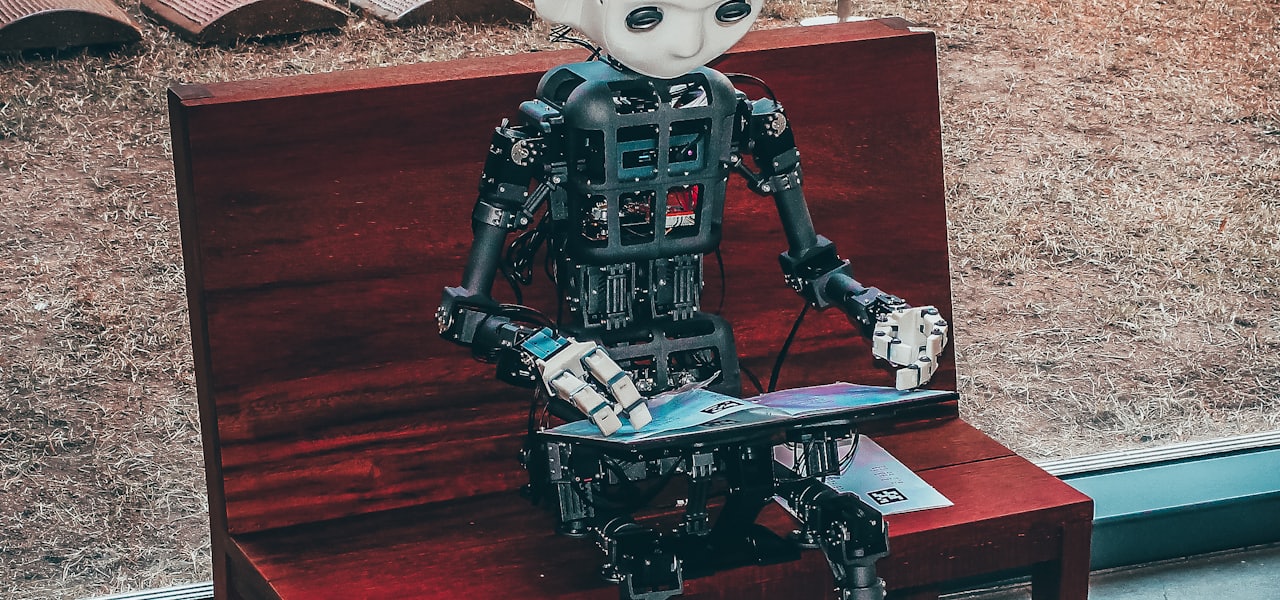
Hello World: How to Be Human in the Age of the Machine (also titled Hello World: Being Human in the Age of Algorithms) is a book on the growing influence of algorithms and artificial intelligence (AI) on human life, authored by mathematician and science communicator Hannah Fry. The book examines how algorithms are increasingly shaping decisions in critical areas such as healthcare, transportation, justice, finance, and the arts. == Overview == Fry uses real-world examples, such as driverless cars and predictive policing, to illustrate her points. She emphasizes that algorithms are not inherently objective; they reflect biases embedded in their design and data inputs. While acknowledging their potential to improve efficiency and accuracy, Fry cautions against over-reliance on machines without human judgment. Fry explores moral questions surrounding algorithmic decision-making, such as whether machines can replace human empathy in critical situations. She advocates for greater scrutiny of algorithms to ensure fairness and avoid harmful biases. The book proposes a "cyborg future", where humans work alongside algorithms to enhance decision-making while retaining ultimate control. == Reception == Hello World has been praised for its clarity, engaging storytelling, and balanced perspective. Critics have highlighted Fry's ability to make complex topics accessible to general audiences while raising important questions about technology's impact on society. The book was shortlisted for awards such as the 2018 Baillie Gifford Prize and the Royal Society Science Book Prize.
Flektor
Flektor was a web application that allowed users the ability to create and "mashup" their own content (photos, videos, music, etc.) and share it via email, on social networking websites MySpace, Facebook, Blogger, Digg, eBay or on personal blogs. The company's website (Flektor.com) launched on April 2, 2007, and over 40,000 people began utilizing its features just one month later. Flektor closed down in January 2009. Flektor offered tools and widgets that included audio, video, photos, text, and approximately 100 effects, transitions and filters to be used with media. Users could create personalized slideshows, polls, postcards, and streaming video projects which the website calls "fleks". Flektor also offered Chat (used as a MySpace addon) and Movie Editor, which provided the ability to edit content and assets together. Users of Flektor could import media from websites like Photobucket and Google's YouTube, and then edit their content with the site's editing tools. Flektor's erstwhile competitors include Slide.com (founded by PayPal co-founder Max Levchin), RockYou!, Yahoo's JumpCut and Brightcove. == History == Flektor was created by Jason Rubin, Andy Gavin and former HBO executive Jason R. Kay. Both Rubin and Gavin spent most of their careers in the video game industry developing games for publishers like Electronic Arts, Universal Interactive Studios and Sony Computer Entertainment America. They founded a successful game development studio called Naughty Dog and were responsible for games such as Crash Bandicoot and Jak and Daxter. After selling Naughty Dog to Sony, Rubin focused on a comic book series called Iron and the Maiden before teaming up again with Gavin to venture into the web industry with Flektor. Jason Kay spent four years at Home Box Office, working as a consultant to the EVP of Business Development. They recruited former employee and then Naughty Dog Lead Programmer Scott Shumaker to lead the technology team along with Gavin. Ryan Evans joined shortly thereafter, spearheading product development. Flektor is based in Culver City, California. In May 2007, the company was sold to Fox Interactive Media, which is a division of News Corp., for more than $20 million. The deal coincided with Fox's acquisition of Photobucket, an image-hosting and sharing website. Fox Interactive Media already holds possession of MySpace, IGN Entertainment, FOXSports.com, AmericanIdol.com and Rotten Tomatoes. After the acquisition, Rubin, Gavin and Kay departed, leaving the studio in the hands of Shumaker and Evans. In the fall of 2007, Flektor partnered with its sister company, MySpace, and MTV to provide instant audience feedback via polls for the interactive MySpace/ MTV Presidential Dialogues series with presidential candidates Senator Barack Obama, Senator John McCain and John Edwards. Use of Flektor's polling system, enabled hosts John McLaughlin and Geoffrey Garin to cater their questions towards subjects of voter-interest. In the fall of 2008, Flektor built the official site for the 2008 Presidential debates, hosted at MyDebates. In January 2009, due to a company directive to focus on the core MySpace property, Fox Interactive announced that Flektor would be shut down, with some of its technology being incorporated into MySpace.
Herbrand Award
The Herbrand Award for Distinguished Contributions to Automated Reasoning is an award given by the Conference on Automated Deduction (CADE), Inc., (although it predates the formal incorporation of CADE) to honour persons or groups for important contributions to the field of automated deduction. The award is named after the French scientist Jacques Herbrand and given at most once per CADE or International Joint Conference on Automated Reasoning (IJCAR). It comes with a prize of US$1,000. Anyone can be nominated, the award is awarded after a vote among CADE trustees and former recipients, usually with input from the CADE/IJCAR programme committee. == Recipients == Past award recipients are: === 1990s === Larry Wos (1992) Woody Bledsoe (1994) John Alan Robinson (1996) Wu Wenjun (1997) Gérard Huet (1998) Robert S. Boyer and J Strother Moore (1999) === 2000s === William W. McCune (2000) Donald W. Loveland (2001) Mark E. Stickel (2002). Peter B. Andrews (2003) Harald Ganzinger (2004) Martin Davis (2005) Wolfgang Bibel (2006) Alan Bundy (2007) Edmund M. Clarke (2008) Deepak Kapur (2009) === 2010s === David Plaisted (2010) Nachum Dershowitz (2011) Melvin Fitting (2012) C. Greg Nelson (2013) Robert L. Constable (2014) Andrei Voronkov (2015) Zohar Manna and Richard Waldinger (2016) Lawrence C. Paulson (2017) Bruno Buchberger (2018) Nikolaj Bjørner and Leonardo de Moura (2019) === 2020s === Franz Baader (2020) Tobias Nipkow (2021) Natarajan Shankar (2022) Moshe Vardi (2023) Armin Biere (2024) Aart Middeldorp (2025)
Fuzzy control system
A fuzzy control system is a control system based on fuzzy logic – a mathematical system that analyzes analog input values in terms of logical variables that take on continuous values between 0 and 1, in contrast to classical or digital logic, which operates on discrete values of either 1 or 0 (true or false, respectively). Fuzzy logic is widely used in machine control. The term "fuzzy" refers to the fact that the logic involved can deal with concepts that cannot be expressed as the "true" or "false" but rather as "partially true". Although alternative approaches such as genetic algorithms and neural networks can perform just as well as fuzzy logic in many cases, fuzzy logic has the advantage that the solution to the problem can be cast in terms that human operators can understand, such that that their experience can be used in the design of the controller. This makes it easier to mechanize tasks that are already successfully performed by humans. == History and applications == Fuzzy logic was proposed by Lotfi A. Zadeh of the University of California at Berkeley in a 1965 paper. He elaborated on his ideas in a 1973 paper that introduced the concept of "linguistic variables", which in this article equates to a variable defined as a fuzzy set. Other research followed, with the first industrial application, a cement kiln built in Denmark, coming on line in 1976. Fuzzy systems were initially implemented in Japan. Interest in fuzzy systems was sparked by Seiji Yasunobu and Soji Miyamoto of Hitachi, who in 1985 provided simulations that demonstrated the feasibility of fuzzy control systems for the Sendai Subway. Their ideas were adopted, and fuzzy systems were used to control accelerating, braking, and stopping when the Namboku Line opened in 1987. In 1987, Takeshi Yamakawa demonstrated the use of fuzzy control, through a set of simple dedicated fuzzy logic chips, in an "inverted pendulum" experiment. This is a classic control problem, in which a vehicle tries to keep a pole mounted on its top by a hinge upright by moving back and forth. Yamakawa subsequently made the demonstration more sophisticated by mounting a wine glass containing water and even a live mouse to the top of the pendulum: the system maintained stability in both cases. Yamakawa eventually went on to organize his own fuzzy-systems research lab to help exploit his patents in the field. Japanese engineers subsequently developed a wide range of fuzzy systems for both industrial and consumer applications. In 1988 Japan established the Laboratory for International Fuzzy Engineering (LIFE), a cooperative arrangement between 48 companies to pursue fuzzy research. The automotive company Volkswagen was the only foreign corporate member of LIFE, dispatching a researcher for a duration of three years. Japanese consumer goods often incorporate fuzzy systems. Matsushita vacuum cleaners use microcontrollers running fuzzy algorithms to interrogate dust sensors and adjust suction power accordingly. Hitachi washing machines use fuzzy controllers to load-weight, fabric-mix, and dirt sensors and automatically set the wash cycle for the best use of power, water, and detergent. Canon developed an autofocusing camera that uses a charge-coupled device (CCD) to measure the clarity of the image in six regions of its field of view and use the information provided to determine if the image is in focus. It also tracks the rate of change of lens movement during focusing, and controls its speed to prevent overshoot. The camera's fuzzy control system uses 12 inputs: 6 to obtain the current clarity data provided by the CCD and 6 to measure the rate of change of lens movement. The output is the position of the lens. The fuzzy control system uses 13 rules and requires 1.1 kilobytes of memory. An industrial air conditioner designed by Mitsubishi uses 25 heating rules and 25 cooling rules. A temperature sensor provides input, with control outputs fed to an inverter, a compressor valve, and a fan motor. Compared to the previous design, the fuzzy controller heats and cools five times faster, reduces power consumption by 24%, increases temperature stability by a factor of two, and uses fewer sensors. Other applications investigated or implemented include: character and handwriting recognition; optical fuzzy systems; robots, including one for making Japanese flower arrangements; voice-controlled robot helicopters (hovering is a "balancing act" rather similar to the inverted pendulum problem); rehabilitation robotics to provide patient-specific solutions (e.g. to control heart rate and blood pressure ); control of flow of powders in film manufacture; elevator systems; and so on. Work on fuzzy systems is also proceeding in North America and Europe, although on a less extensive scale than in Japan. The US Environmental Protection Agency has investigated fuzzy control for energy-efficient motors, and NASA has studied fuzzy control for automated space docking: simulations show that a fuzzy control system can greatly reduce fuel consumption. Firms such as Boeing, General Motors, Allen-Bradley, Chrysler, Eaton, and Whirlpool have worked on fuzzy logic for use in low-power refrigerators, improved automotive transmissions, and energy-efficient electric motors. In 1995 Maytag introduced an "intelligent" dishwasher based on a fuzzy controller and a "one-stop sensing module" that combines a thermistor, for temperature measurement; a conductivity sensor, to measure detergent level from the ions present in the wash; a turbidity sensor that measures scattered and transmitted light to measure the soiling of the wash; and a magnetostrictive sensor to read spin rate. The system determines the optimum wash cycle for any load to obtain the best results with the least amount of energy, detergent, and water. It even adjusts for dried-on foods by tracking the last time the door was opened, and estimates the number of dishes by the number of times the door was opened. Xiera Technologies Inc. has developed the first auto-tuner for the fuzzy logic controller's knowledge base known as edeX. This technology was tested by Mohawk College and was able to solve non-linear 2x2 and 3x3 multi-input multi-output problems. Research and development is also continuing on fuzzy applications in software, as opposed to firmware, design, including fuzzy expert systems and integration of fuzzy logic with neural-network and so-called adaptive "genetic" software systems, with the ultimate goal of building "self-learning" fuzzy-control systems. These systems can be employed to control complex, nonlinear dynamic plants, for example, human body. == Fuzzy sets == The input variables in a fuzzy control system are in general mapped by sets of membership functions similar to this, known as "fuzzy sets". The process of converting a crisp input value to a fuzzy value is called "fuzzification". The fuzzy logic based approach had been considered by designing two fuzzy systems, one for error heading angle and the other for velocity control. A control system may also have various types of switch, or "ON-OFF", inputs along with its analog inputs, and such switch inputs of course will always have a truth value equal to either 1 or 0, but the scheme can deal with them as simplified fuzzy functions that happen to be either one value or another. Given "mappings" of input variables into membership functions and truth values, the microcontroller then makes decisions for what action to take, based on a set of "rules", each of the form: IF brake temperature IS warm AND speed IS not very fast THEN brake pressure IS slightly decreased. In this example, the two input variables are "brake temperature" and "speed" that have values defined as fuzzy sets. The output variable, "brake pressure" is also defined by a fuzzy set that can have values like "static" or "slightly increased" or "slightly decreased" etc. === Fuzzy control in detail === Fuzzy controllers are very simple conceptually. They consist of an input stage, a processing stage, and an output stage. The input stage maps sensor or other inputs, such as switches, thumbwheels, and so on, to the appropriate membership functions and truth values. The processing stage invokes each appropriate rule and generates a result for each, then combines the results of the rules. Finally, the output stage converts the combined result back into a specific control output value. The most common shape of membership functions is triangular, although trapezoidal and bell curves are also used, but the shape is generally less important than the number of curves and their placement. From three to seven curves are generally appropriate to cover the required range of an input value, or the "universe of discourse" in fuzzy jargon. As discussed earlier, the processing stage is based on a collection of logic rules in the form of IF-THEN statements, where the IF part is called the "antecedent" and the THEN part is called the "consequent". Typical fuzzy
Your AI Slop Bores Me
Your AI Slop Bores Me (stylized in all lowercase) is a website and social experiment created by programmer Mihir Maroju. Serving as a parody of large language models (LLMs) like ChatGPT and Claude, all questions and image prompts posed by users are answered by other, randomly-selected human users of the site. As of March 2026, the site has reached 50 million hits and sits at 16,000 concurrent users. == Background == In an interview with Fast Company, Maroju said he was inspired to create the site by his frustration with AI proliferating the internet with AI generated content, saying the site came from "a frustration for AI art and its proliferation, making artists' lives worse and also just filling the internet with low-effort generic slop". == Overview == The site has a credit system, in which a first-time user will be given 1 credit for free. Every 10 minutes, if a user has 0 credits, they will receive 2 credits. Once the credits are used up, the user can no longer do prompts unless the user earns them. The user can earn credits by responding to other user's prompts by "larping as AI" while given a 75-second time limit. Prompts can either be for a written response, or a drawing for the other user to fulfill the prompt. The maximum amount of credits a user can have is 6 credits, and cannot exceed the maximum limit. If the prompting user activates "thinking mode", the countdown is extended to 150 seconds for the cost of 2 credits. == Reception == The site has garnered attention and praise from X users, and across many online communities. The Daily Dot's Rachel Kiley wrote that "the best part about the game is that there's really no right or wrong way to do it. Humans aren't LLMs trained on copyrighted material and the whole of the free internet, but we do retain a certain amount of the information we've learned from those things over the course of our lives, while also being capable of creativity". Chris Taylor of Mashable called the site "amateurish and charming". Aftermath's Nicole Carpenter wrote that the site reminded her of "the human touch of chaos".
Intelligent control
Intelligent control is a class of control techniques that use various artificial intelligence computing approaches like neural networks, Bayesian probability, fuzzy logic, machine learning, reinforcement learning, evolutionary computation and genetic algorithms. == Overview == Intelligent control can be divided into the following major sub-domains: Neural network control Machine learning control Reinforcement learning Bayesian control Fuzzy control Neuro-fuzzy control Expert Systems Genetic control New control techniques are created continuously as new models of intelligent behavior are created and computational methods developed to support them. === Neural network controller === Neural networks have been used to solve problems in almost all spheres of science and technology. Neural network control basically involves two steps: System identification Control It has been shown that a feedforward network with nonlinear, continuous and differentiable activation functions have universal approximation capability. Recurrent networks have also been used for system identification. Given, a set of input-output data pairs, system identification aims to form a mapping among these data pairs. Such a network is supposed to capture the dynamics of a system. For the control part, deep reinforcement learning has shown its ability to control complex systems. === Bayesian controllers === Bayesian probability has produced a number of algorithms that are in common use in many advanced control systems, serving as state space estimators of some variables that are used in the controller. The Kalman filter and the Particle filter are two examples of popular Bayesian control components. The Bayesian approach to controller design often requires an important effort in deriving the so-called system model and measurement model, which are the mathematical relationships linking the state variables to the sensor measurements available in the controlled system. In this respect, it is very closely linked to the system-theoretic approach to control design.
DARPA Prize Competitions
Over the years, the U.S. Defense Advanced Research Projects Agency (DARPA) has conducted numerous prize competitions to spur innovation. A prize competition allows DARPA to establish an ambitious goal, opening the door to novel approaches from the public that might otherwise appear too risky for experts in a particular field to pursue. == Statutory authorities == In 1999, Congress provided prize competition authority to DARPA in the National Defense Authorization Act for Fiscal Year 2000 (P.L. 106–65), 10 U.S.C. § 4025, formerly 10 U.S.C. §2374a. DARPA also conducts prize competitions under the America COMPETES Act, 15 U.S.C. § 3719. == Recent prize competitions == DARPA Grand Challenge (2004 and 2005) was a prize competition to spur the development of autonomous vehicle technologies. The $1 million prize went unclaimed as no vehicles could complete the challenging desert route from Barstow, CA, to Primm, NV, on March 13, 2004. A year later, on October 8, 2005, the Stanford Racing Team won the $2 million prize during the second competition of the Grand Challenge in the desert Southwest near the California/Nevada state line. DARPA Urban Challenge (2007) required the competitors to build an autonomous vehicle capable of driving in traffic and performing complex maneuvers such as merging, passing, parking, and negotiating intersections. On November 3, 2007, the Carnegie Mellon Team won the $2 million prize, and its vehicle became the first autonomous vehicle that interacted with both manned and unmanned vehicle traffic in an urban environment. DARPA Network Challenge (Red Balloon Challenge) (2009) explored the roles that the Internet and social networking play in solving broad-scope, time-critical problems. On December 5, 2009, the Massachusetts Institute of Technology team won $40,000 by locating the ten moored, eight-foot, red weather balloons at ten places in the United States within seven hours. DARPA Digital Manufacturing Analysis, Correlation and Estimation Challenge (DMACE) (2010) was a three-month contest to showcase the potential of digital manufacturing of advanced materials. The University of California at Santa Barbara team won a $50,000 prize for crushing 180 digitally manufactured (DM) titanium mesh spheres with the most accurate predictive model of the components’ properties. DARPA Shredder Challenge (2011) was to identify and assess potential capabilities and vulnerabilities to sensitive information in the national security community. Participating teams must download the images of the documents shredded into more than 10,000 pieces from the Challenge website, reconstruct the documents, and solve the five puzzles. Of almost 9,000 teams, the San Francisco-based All Your Shreds Are Belong to U.S team won the $50,000 prize. DARPA UAVForge Challenge (2011-2012) aimed to build and test a user-intuitive, backpack-portable unmanned aerial vehicle (UAV) that could quietly fly in and out of critical environments to conduct sustained surveillance for up to three hours. The $100,000 prize was not claimed because none of the 140 teams met the technical matrix. DARPA Cash for Locating & Identifying Quick Response Codes (CLIQR) Quest Challenge (2012) explored the role the Internet and social media played in the timely communication, wide-area team-building, and urgent mobilization required to solve broad scope, time-critical problems. The challenge offered $40,000 to the first individual or team that could locate seven posters appearing in U.S. cities bearing the DARPA logo and a quick response code (QR) within 15 days. No team found and submitted all seven codes. DARPA Fast Adaptable Next-Generation Ground Vehicle (FANG) Challenge (2012-2013) was to use three competitions for the design of an infantry fighting vehicle, culminating in prototypes. In April 2013, DARPA awarded US$1 million to a three-man team during the first competition. DARPA decided not to proceed with the second and third competitions as originally planned and transitioned the technologies to the defense and commercial industry through the Digital Manufacturing and Design Innovation Institute (DMDII). DARPA Spectrum Challenge (2013-2014) sought to demonstrate how a software-defined radio can use a given communication channel in the presence of other users and interfering signals. Three teams emerged as the overall winners, winning a total of $150,000 in prizes. DARPA Chikungunya (CHIKV) Challenge (2014-2015) was a health-related effort to develop the most accurate predictions of CHIKV cases for all Western Hemisphere countries and territories between September 2014 and March 2015. On May 12, 2015, DARPA awarded $500,000 in prizes to the 11 winners of the competition during a scientific review DARPA Robotics Challenge (DRC) (2013-2015) aimed to develop semi-autonomous ground robots that could do "complex tasks in dangerous, degraded, human-engineered environments." A South Korean team won the first prize of $2 million, and two U.S. teams won $1 million and $500,000 as second and third winners. DARPA Cyber Grand Challenge (CGC) (2014 - 2016) was to “create automatic defensive systems capable of reasoning about flaws, formulating patches and deploying them on a network in real time.” The top three winners were awarded prizes of $2 million, $1 million, and $750,000, respectively. DARPA Spectrum Collaboration Challenge (SC2) (2016-2019) aimed to encourage the development of AI-enabled wireless networks to “ensure that the exponentially growing number of military and civilian wireless devices would have full access to the increasingly crowded electromagnetic spectrum.” A team from the University of Florida won the overall top prize of US$2 million at the final SC2 competition. DARPA Subterranean (SubT) Challenge (2017-2021) was to develop robotic technologies to map, navigate, search and exploit complex underground environments. The first-place winners of the system final competition and of the virtual final competition were awarded $2 million and $750,000, respectively, with multiple prizes awarded to the second and third-place winners. DARPA Launch Challenge (2018-2020) was a $12 million satellite launch challenge to demonstrate responsive and flexible space launch capabilities from the small launch providers and was to culminate in two separate launch competitions where the competitors must launch a satellite to low Earth orbit (LEO) within days of each other at different locations in the United States. The competition ended without a winner. DARPA Forecasting Floats in Turbulence (FFT) Challenge (2021) was to spur technologies that could predict the location of sea drifters or floats within 10 days. DARPA awarded $25,000 for first place, with prizes of $15,000 and $10,000 for second place and third place. DARPA Artificial Intelligence Cyber Challenge (AIxCC) (2023–2025) was a two-year challenge and asks competitors to design novel AI systems to secure critical software code on which Americans rely. The total prize money is $29.5 million. In March 2024, the Advanced Research Projects Agency for Health (ARPA-H) partnered with DARPA, contributing an additional $20 million to the competition's prize pool to address software vulnerabilities in medical devices, hospital IT, and biotech equipment. AIxCC collaborates with Google, Microsoft, OpenAI, Anthropic, Linux Foundation, Open Source Security Foundation, Black Hat USA, and DEF CON, all of which provide AIxCC with access to large language models. In August 2024, AIxCC held the semifinal at DEF CON in Las Vegas. DARPA and ARPA-H tested all 42 submissions by running them through various open-source coding projects with deliberately injected vulnerabilities and scored the tools based on their effectiveness in identifying and fixing security flaws. Seven teams, each winning $2 million in the semifinals, competed in the final round of the AIxCC at the August 2025 DEF CON conference. Team Atlanta won first place with a $4 million prize for its cyber reasoning systems, which identified and patched vulnerabilities across 54 million lines of code. DARPA Triage Challenge (2023 – 2026) aims to spur the development of novel physiological features for medical triage, with a total prize money of $7 million. In October 2024, Challenge Event 1 was held in Perry, Georgia, featuring to-scale replicas of disaster sites such as an airplane crash and Hurricane Katrina, and teams competed based on how closely their data aligned with the agency’s official data and how quickly and accurately their autonomous systems could identify individuals most urgently in need of medical care. DARPA concluded the second year of competitions and, in November 2025, named the top performers in systems and data categories, which will advance to the final 2026 competition. The DARPA Lift Challenge (2025-2026) is for participants to design unmanned aerial systems capable of carrying up to four times their own weight, with a minimum payload of 110 pounds. Acco